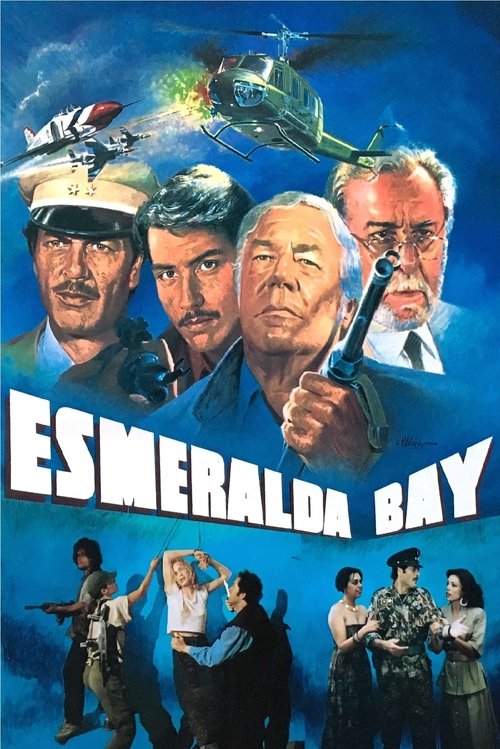
Esmeralda Bay
1989
No user ratings available yet
Representation score: 5.1 out of 10

Representation Score
Fair
1993
Director
José Luis García Sánchez
Runtime
91 minutes
Average Rating
No ratings yetNew Showbiz Analysis
Banderas, the Tyrant is a political drama that stands out for its focus on an imaginary Latin American nation and an indigenous dictator. By centering the narrative on these elements, the film successfully moves away from Western-centric political clichés to explore post-colonial power structures. However, the film's emphasis on large-scale political conflicts means there is limited visibility for individual identities. The narrative structure leans towards traditional masculine hierarchies, leaving little room for gendered or queer perspectives.
Category Breakdown
The film does not include any clear examples of LGBTQ+ narratives or non-straight identities. It focuses more on large-scale political conflicts rather than personal identity issues.
The story centers around a male dictator and male-led rebellions. Women do not play a significant role in driving political changes or challenging traditional masculine hierarchies.
The film highlights an indigenous dictator in a Latin American setting, which helps to disrupt Western-centric views by emphasizing indigenous ability to act. This approach prioritizes indigenous perspectives.
The story delves into systemic corruption and the tension between legal reforms and revolutionary movements. It challenges Western institutional stability by exploring post-colonial political dynamics.
There is no information available about the portrayal of physically or neurodivergent characters in this film.
Present on Screen
Limited or Absent
Official Synopsis
In Santa Fe de Tierra Firme, an imaginary Latin American country, the indigenous dictator Santos Banderas rules with an iron fist. A group of rebels trying to seize power by force while some liberals try a change of government legally.
1989

1967

1977

2020
1959

1984

1980
1994
No reviews yet. Be the first to share your thoughts on this movie!
Use the rating form above to leave a star rating and optional review.