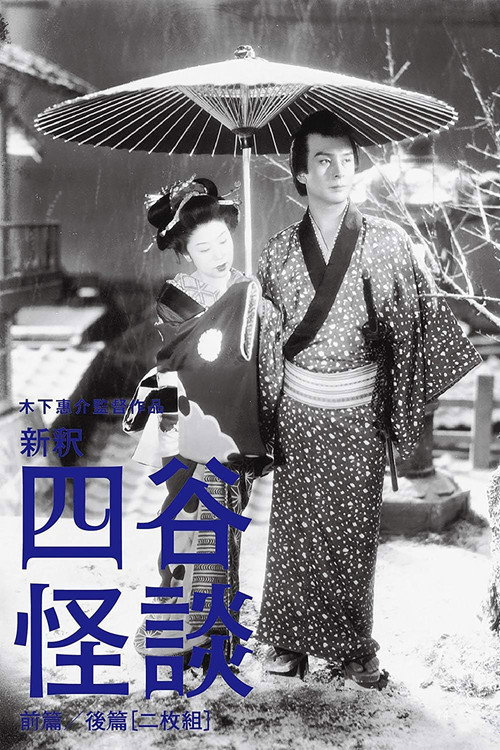
Yotsuya Ghost Story Part 1
1949
No user ratings available yet
Diversity score: 4.5 out of 10
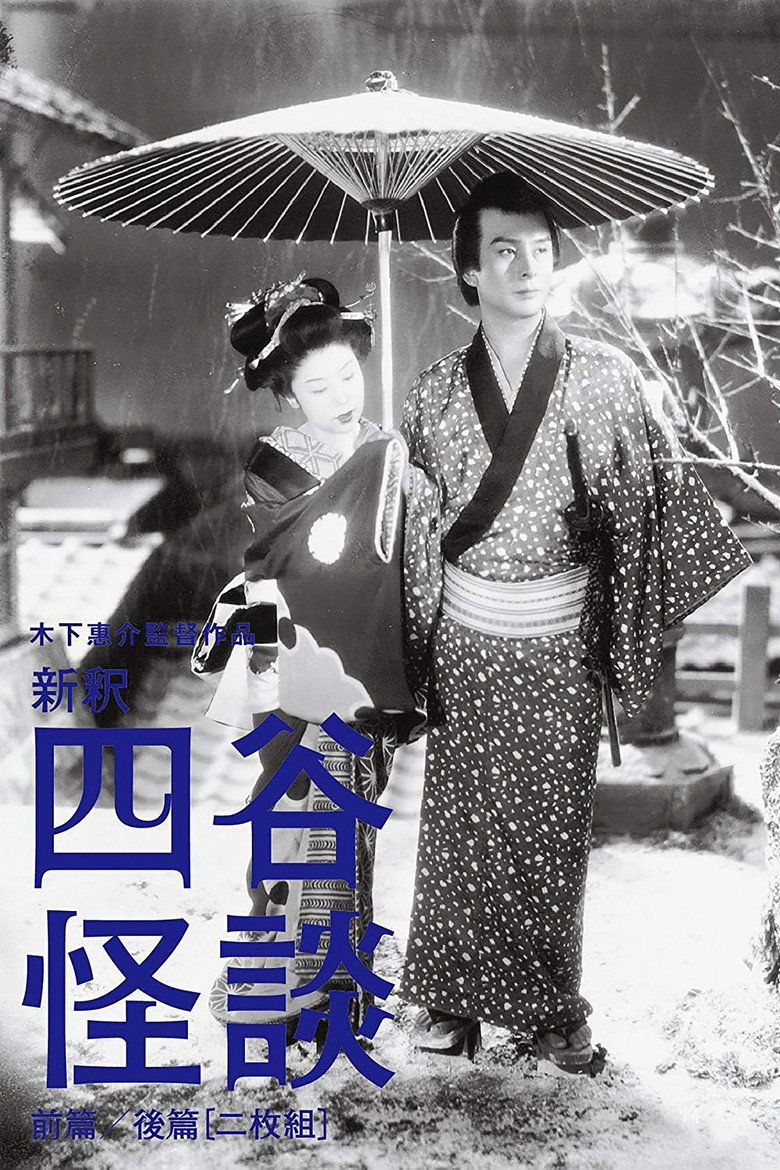
1949
Director
Keisuke Kinoshita
Runtime
73 minutes
Average Rating
No ratings yetSynopsis
Part 2 starts where the first film ended, with Iemon disposing of the bodies of his wife and Kohei, marrying upward, and being blackmailed by the evil Naosuke.
Overall Score
Fair
Category Breakdown
LGBTQ+ Representation
The film lacks any evidence of non-cisnormative gender identities or same-sex intimacy. The narrative focuses on traditional, fractured interpersonal dynamics.
Gender Representation
Female characters appear to function primarily within the framework of the protagonist's ambition or victimization. This leans toward traditional tragic tropes rather than active female agency.
Racial & Ethnic Diversity
The casting is ethnically homogeneous, reflecting the historical reality of the Edo-period setting. It does not utilize race-bending to disrupt visual norms.
Religious & Cultural Diversity
The story explores moral relativism and the corruption of social climbing. It challenges stable morality by framing honor and duty as fragile and easily subverted.
Disability Representation
There is no evidence of characters with visible or invisible disabilities being portrayed with agency or as central narrative elements.
Strengths
Areas for Improvement
AI Analysis
This psychological horror study focuses on the dark side of social mobility and moral decay. It centers on a protagonist whose success is built upon systemic transgression and the subversion of marital sanctity. While the film lacks modern intersectional markers, it provides a critique of status-seeking. The narrative disrupts conventional expectations of domestic stability by highlighting the fragility of traditional honor. Ultimately, the film functions as a study of individual greed and the corruption of social structures rather than a vehicle for diverse representation.
1949
1959
2001
1982
1956

2024
1968
2012
1965
1968
2004
1962
No reviews yet. Be the first to share your thoughts on this movie!
Use the rating form above to leave a star rating and optional review.