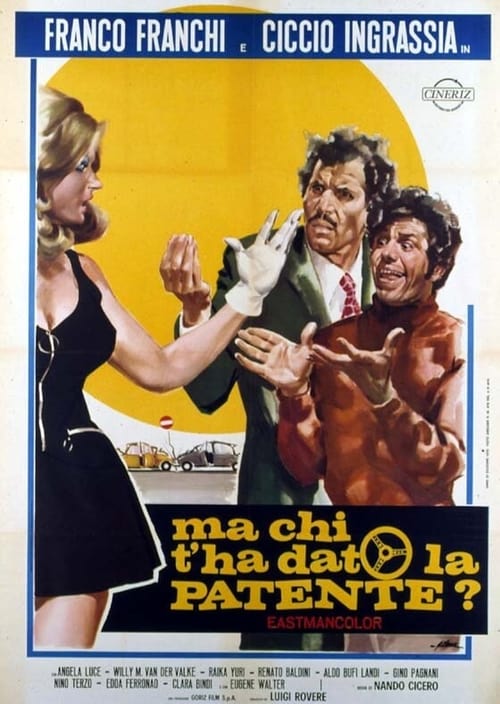
Who Gave You the License?
1970
No user ratings available yet
Representation score: 3.9 out of 10

Representation Score
Fair
1983
PGDirector
Lina Wertmüller
Runtime
105 minutes
Average Rating
No ratings yetNew Showbiz Analysis
Lina Wertmüller uses political farce to dismantle institutional hierarchies and the myth of competent leadership. The film excels at deconstructing the state apparatus and the absurdity of power through its central conflict. However, the work remains limited by the era's social focus, lacking explicit LGBTQ+ representation or multi-ethnic casting. The diversity is found more in its systemic critique than in identity-based character arcs. Ultimately, the film is a sophisticated subversion of social norms, even if it lacks the multi-layered breadth expected in contemporary cinema.
Category Breakdown
The film focuses on political and class-based satire rather than explicit LGBTQ+ narratives. There are no specific LGBTQ+ character arcs or non-conforming gender identities in the plot.
The narrative challenges traditional masculine leadership by highlighting the incompetence of high-ranking officials. This approach disrupts the stability of conventional patriarchal authority through humor.
Reflecting its 1983 Italian context, the film features a predominantly homogenous cast. It lacks diverse casting or multi-ethnic representation typical of modern productions.
The story sharply critiques Western institutions and technological progress. It challenges the stability of the state by portraying political figures as subjects of chaos.
There is no discernible evidence regarding the portrayal of physical or neurodivergent disabilities. No characters or plot points involving disability are identified in the narrative.
Present on Screen
Limited or Absent
Official Synopsis
When the Minister of the Interior accidentally becomes locked inside his computerized, armoured limo following a mechanical failure, it triggers a series of headline-making events, especially as he happens to be in front of his political opponent's home. The event becomes a scandal involving many, including the rival, his feminist daughter, his wife, and her one-time terrorist lover hiding in the basement.
1970
1971
1992

1980
1963
1964
1983

1968
No reviews yet. Be the first to share your thoughts on this movie!
Use the rating form above to leave a star rating and optional review.