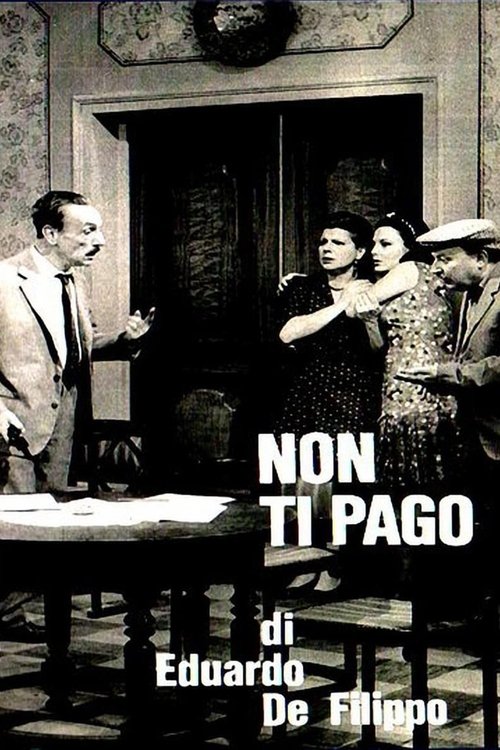
Non ti pago
1964
No user ratings available yet
Representation score: 4.4 out of 10
Representation Score
Fair
1975
Director
Eduardo De Filippo
Runtime
0 minutes
Average Rating
No ratings yetNew Showbiz Analysis
Eduardo De Filippo’s work explores the tension between social class and individual morality. This film specifically dismantles the hypocrisy of traditional institutions through the lens of a struggling acting troupe. The narrative successfully challenges gendered power dynamics, particularly through Viola’s active role. However, the film remains limited by its period-specific homogeneity, lacking diverse racial or LGBTQ+ representation. Ultimately, the film is a character study of social performativity. It trades modern identity markers for a nuanced, skeptical look at the rigid moral structures of the Italian bourgeoisie.
Category Breakdown
The film focuses on marriage and biological lineage, assuming everyone is straight and cisgender. There are no queer narratives or non-cisgender identities in the story.
Viola challenges traditional hierarchies by actively working to secure her future. The film questions the typical male-dominated power structure by holding the male lead accountable.
The setting reflects the homogeneous demographic of mid-20th-century Italy. There is no racial blending or non-white casting to diversify the European narrative.
The story critiques traditional social institutions and the instability of class-based respectability. It portrays 'honor' and 'gentlemanly conduct' as performative social masks rather than inherent virtues.
There are no visible or invisible disabilities portrayed as central to the character arcs or the plot progression.
Present on Screen
Limited or Absent
Official Synopsis
Guests of the wealthy young Don Alberto De Simone, the ramshackle troupe of actors known as "L'eclettica," led by Gennaro De Sia, rehearse a new play in an attempt to redeem themselves after the fiascos of their previous performances. The "rehearsals" are interrupted by the arrival of Salvatore, brother of Viola, an actress who is expecting Gennaro's child and who wants to force the man to act like a gentleman and marry her.
1964

1980
1968
1975
1971

1967
1967

1967
No reviews yet. Be the first to share your thoughts on this movie!
Use the rating form above to leave a star rating and optional review.