Happiness Ahead
1934
No user ratings available yet
Representation score: 2.2 out of 10
Representation Score
Minimal
1936
Director
Victor Saville
Runtime
83 minutes
Average Rating
No ratings yetNew Showbiz Analysis
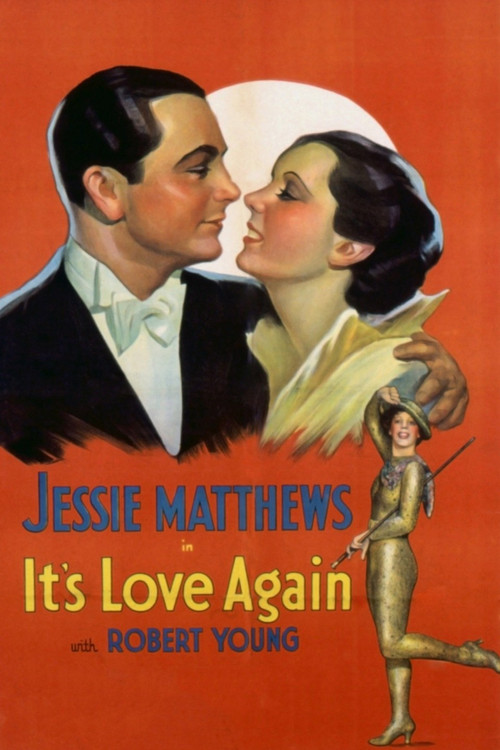
It's Love Again is a classic 1930s musical comedy that prioritizes escapism over social critique. While the female lead shows initiative through her clever deception, the film remains firmly rooted in the era's conventional gender and social hierarchies. The production relies heavily on colonial-era clichés, using distant locales like India as exotic backdrops for British high-society adventures rather than providing authentic ethnic representation. This reinforces a Western-centric worldview common to the period. Ultimately, the film functions as a standard period piece. It lacks depth in representing multiple aspects of diversity, focusing instead on traditional romantic structures and the pursuit of fame within a narrow cultural lens.
Category Breakdown
The film follows a typical heterosexual romance between Elaine and Peter. There are no depictions of non-straight or non-cisgender identities or same-sex relationships.
Elaine uses a fake persona to navigate the entertainment industry, showing strong initiative. However, her influence is tied to performing femininity to attract male attention.
The story relies on colonial-era clichés, using a romanticized version of India as a mere plot device. There is no meaningful representation of non-Anglo-Saxon characters.
The narrative celebrates 1930s London social structures and Western theatrical traditions. It focuses on social mobility and fame within a capitalist entertainment framework.
There is no documented evidence regarding the inclusion or portrayal of characters with physical or neurodivergent disabilities.
Present on Screen
Limited or Absent
Official Synopsis
Elaine Bradford is a young singer and dancer, looking for her big break. Peter Carlton is a gossip columnist facing a deadline and a blank page. So, Peter invents "Mrs. Smythe-Smythe", a mysterious Englishwoman who spends her days hunting tigers in India, jumping out of airplanes, and generally driving men mad with her beauty. Since no one in London has ever seen Mrs. Smythe-Smythe, Elaine decides to impersonate the lady, in hopes that the publicity will land her the big break she's been looking for.
1934
1948
1930

1937

1933
1961

1945
1933
No reviews yet. Be the first to share your thoughts on this movie!
Use the rating form above to leave a star rating and optional review.