No, No, Nanette
1940
No user ratings available yet
Representation score: 0.4 out of 10
Representation Score
Minimal
1951
ApprovedDirector
Robert Z. Leonard
Runtime
90 minutes
Average Rating
No ratings yetNew Showbiz Analysis
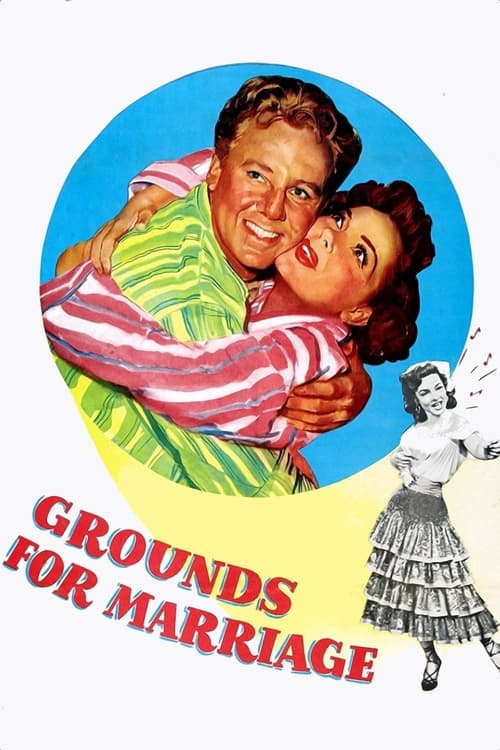
Grounds for Marriage is a typical mid-century musical comedy that upholds traditional social hierarchies. The story follows a female performer trying to restore a previous marriage, a cliché that reinforces domestic stability rather than challenging gender roles. The film adheres to the homogeneous casting and conservative storytelling prevalent in 1951 Hollywood. It serves as a conventional piece of studio-era entertainment designed to uphold existing social norms. Ultimately, the film offers little in the way of subversive ability to act or diverse representation, reflecting the era's standard moral and social frameworks.
Category Breakdown
The film does not include any characters with non-traditional gender identities or same-sex relationships. The plot revolves around a former husband and wife, reinforcing the idea that everyone is straight and cisgender.
Ina Massine demonstrates strong professional skills as an opera singer. However, the plot focuses on reuniting with her former husband, emphasizing traditional romantic relationships and marital stability.
The production follows the Anglo-centric casting standards typical of early 1950s musical comedies. There is no evidence of a diverse or multi-ethnic cast.
The narrative promotes traditional institutions like marriage within a standard moral framework. It lacks any anti-Western or secularist themes.
There is no mention of characters with visible or invisible disabilities within the narrative.
Present on Screen
Limited or Absent
Official Synopsis
Opera singer Ina Massine tries to win back former husband Dr. Lincoln I. Bartlett.
1940
1954
1946

1953
1955

1945
1939
1937
No reviews yet. Be the first to share your thoughts on this movie!
Use the rating form above to leave a star rating and optional review.