
Teachers are People
1952
No user ratings available yet
Diversity score: 1.8 out of 10
1951
Director
Jack Kinney
Runtime
7 minutes
Average Rating
No ratings yetSynopsis
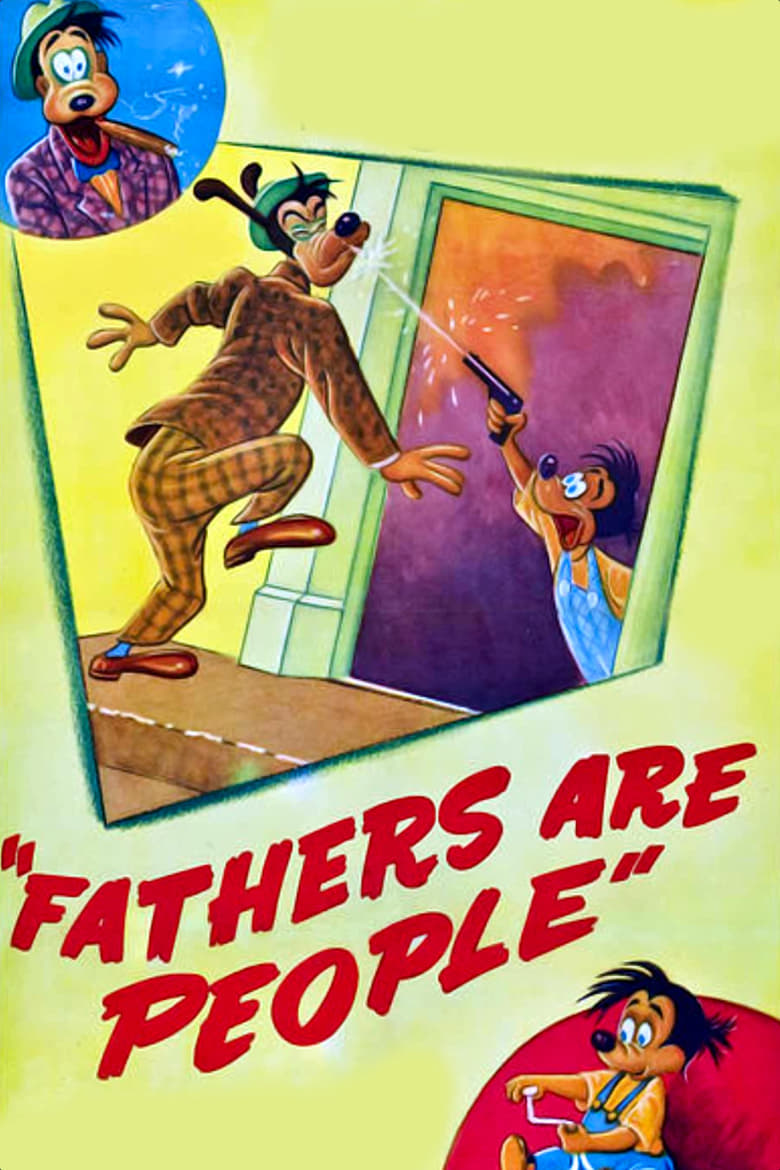
George Geef rushes to the office to inform his fellow employees, "Hey, fellas! I'm a father!". Unfortunately, Geef later learns that, with fatherhood, comes responsibility and lots of it. He must discipline his son when he starts fighting with neighboring kids, filling his pipe with bubble water, and pestering him while he tries to read the newspaper. But most difficult of all is getting him to pick up his toys which is no easy task. Finally, he gets ready to apply hair brush to child's behind but is talked out of it when he sees his son sleeping peacefully. "Kids, they're wonderful," he concludes.
Overall Score
Minimal
Category Breakdown
LGBTQ+ Representation
The film focuses exclusively on a heteronormative nuclear family. There is no evidence of queer subtext or non-cisnormative identities.
Gender Representation
The narrative centers on the patriarchal experience of fatherhood. It reinforces mid-century gender roles by emphasizing male leadership and domestic responsibility.
Racial & Ethnic Diversity
The work depicts a homogeneous social environment. There is no indication of racial blending or diverse casting within this conventional domestic setting.
Religious & Cultural Diversity
The story promotes traditional Western family values and the sanctity of the nuclear household. It presents domestic life as a wholesome, universal experience.
Disability Representation
Characters appear to function within standard physical and neurotypical parameters. There is no evidence of visible or invisible disabilities.
Strengths
Areas for Improvement
AI Analysis
Fathers Are People serves as a quintessential example of mid-century traditionalist media. The narrative architecture is designed to reinforce established social hierarchies and the nuclear family model rather than challenge them. The film operates within a highly conventional framework of 1950s social norms. It lacks intersectional complexity, focusing instead on a singular, homogeneous domestic experience typical of the era's mainstream animation.
1952
1952
1953
1953
1951
1952
1954
1952
1953
1951
1950
1951
No reviews yet. Be the first to share your thoughts on this movie!
Use the rating form above to leave a star rating and optional review.