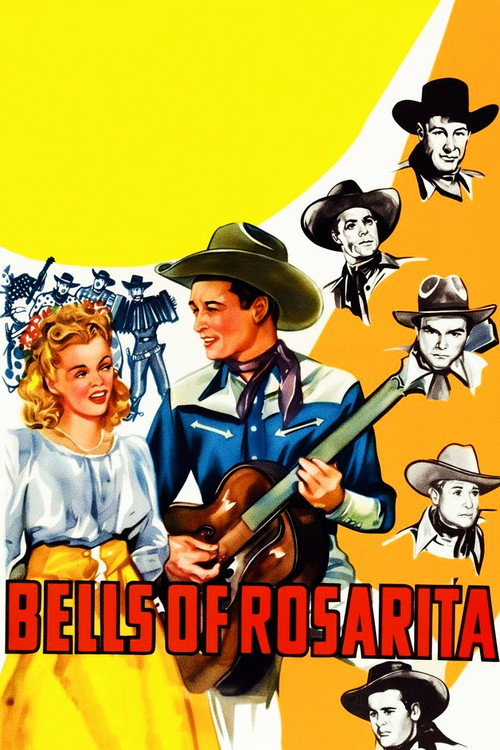
Bells of Rosarita
1945
No user ratings available yet
Representation score: 2.4 out of 10
Representation Score
Minimal
1946
ApprovedDirector
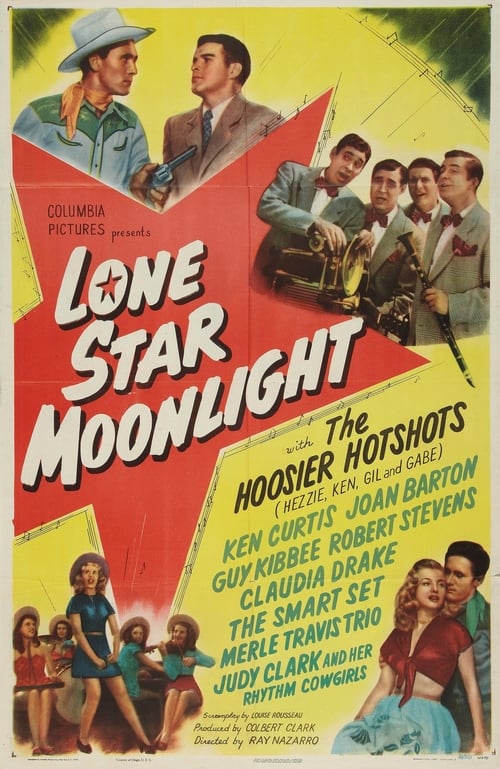
Ray Nazarro
Runtime
67 minutes
Average Rating
No ratings yetNew Showbiz Analysis
Lone Star Moonlight is a classic mid-century B-movie Western that reinforces traditional social hierarchies. The plot emphasizes male-driven conflicts over property, radio station ownership, and romantic conquest, leaving little space for diverse perspectives. The film adheres closely to the cultural norms of its time, focusing on the restoration of family wealth and traditional masculinity. It lacks representation of non-assuming gender matches what was assigned at birth identities, racial diversity, or characters with disabilities. Overall, the film serves to reinforce the status quo, presenting a narrative structure rooted in traditional Western values and conventional romance.
Category Breakdown
The film focuses on a traditional love triangle involving male characters competing for a single woman. It stays within the conventional romantic frameworks of the 1940s era.
The plot revolves around male competition over business ownership and financial matters. Female characters are mainly portrayed as romantic interests or defined by their relationships to men.
The story follows a typical Anglo-Saxon frontier cliché common during the era. The cast appears homogeneous with no visible racial diversity or non-white characters.
Themes center on individual entrepreneurship and restoring family wealth. The narrative upholds traditional Western social structures and values.
There is no depiction of characters with physical, sensory, or neurodivergent disabilities. Characters have standard abilities typical of Western genre protagonists.
Present on Screen
Limited or Absent
Official Synopsis
Returning G.I. Curt Norton (Ken Curtis), owner of a radio station, finds his father Amos (Guy Kibbee) has allowed the station to run down and has squandered Curt's money in bad investments in war-surplus material. Eddie Jackson (Robert Kellard), who owns the rival station, is also attracted to Curt's sweetheart Jean White (Joan Barton). When Curt and the Hoosier Hotshots successfully stage an auction to raise money, Eddie hires Mimi Carston (Claudia Drake) to claim that Curt married her in France.
1945
1942
1946
1947
1947
1951
1944
1937
No reviews yet. Be the first to share your thoughts on this movie!
Use the rating form above to leave a star rating and optional review.