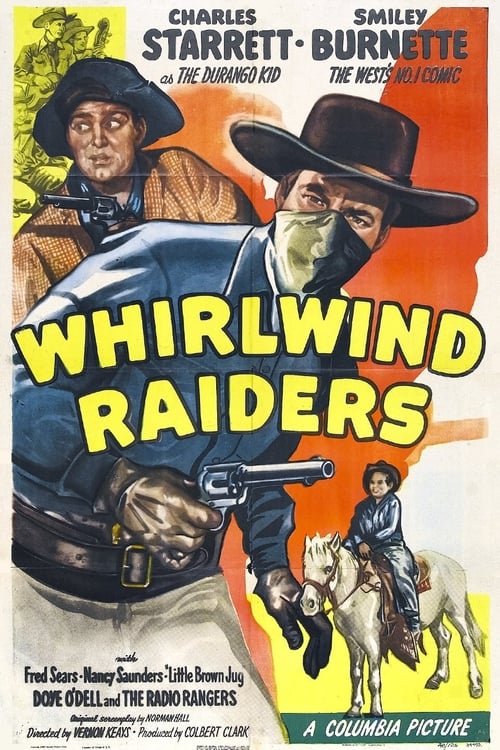
Whirlwind Raiders
1948
No user ratings available yet
Representation score: 1.7 out of 10
Representation Score
Minimal
1946
ApprovedDirector
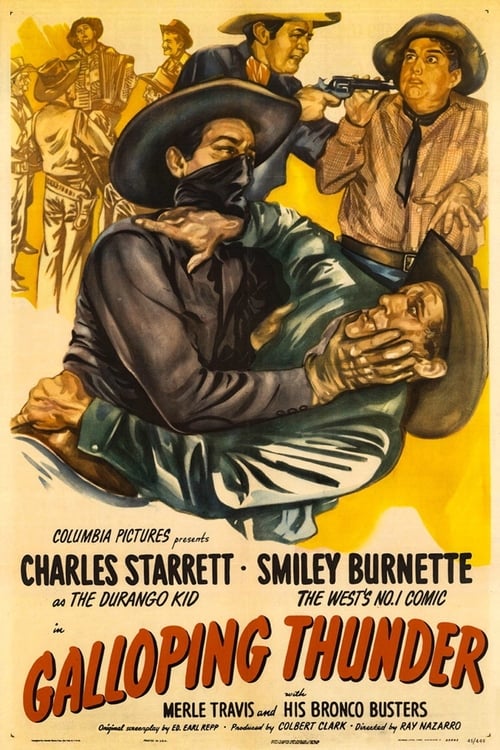
Ray Nazarro
Runtime
54 minutes
Average Rating
No ratings yetNew Showbiz Analysis
Galloping Thunder is a standard B-Western that relies heavily on established genre clichés and clear-cut moral binaries. The story focuses on frontier justice and the protection of property through a traditional investigative lens. The film lacks any attempt to challenge historical archetypes or provide multi-layered representation. It functions as a period-typical piece of entertainment that reinforces the social and racial norms of the 1940s. Ultimately, the narrative architecture is built around male-driven action and conventional social structures, offering little depth beyond the hero-versus-villain dynamic.
Category Breakdown
The film follows a traditional storyline centered around heterosexual relationships, focusing on the protagonist and his relationship with a female love interest.
Gender roles in the film are traditional, reflecting those of 1940s Westerns. The female lead's role is defined by her relationships to men, while the plot prioritizes male control over the story.
The film centers on Anglo-American perspectives of the frontier. It adheres to the homogeneous casting norms common to mid-1940s Western cinema.
The story reinforces traditional Western values like property protection and law enforcement. It promotes a clear moral framework rather than exploring systemic critiques.
There are no visible or invisible disabilities portrayed. No characters with disabilities are used as plot devices within the narrative.
Present on Screen
Limited or Absent
Official Synopsis
The cattle herds of some Arizona ranchers are being stampeded and stolen, so the Arizona Stockmen's Syndicate sends ace investigator Steve Reynolds in to find out who is responsible. Steve poses as a vicious gunslinger named Buck McCloud to work his way into the gang, and then becomes the Durango Kid to disrupt the activities he learns about. Jud Temple is the loyal fiancée of town banker Grat Hanlon who turns out to be the brain-trust behind the gang.
1948
1945
1942
1928
1942
1948

1940
1950
No reviews yet. Be the first to share your thoughts on this movie!
Use the rating form above to leave a star rating and optional review.