
Gunning for Vengeance
1946
No user ratings available yet
Representation score: 0.7 out of 10
Representation Score
Minimal
1946
ApprovedDirector
Ray Nazarro
Runtime
56 minutes
Average Rating
No ratings yetNew Showbiz Analysis
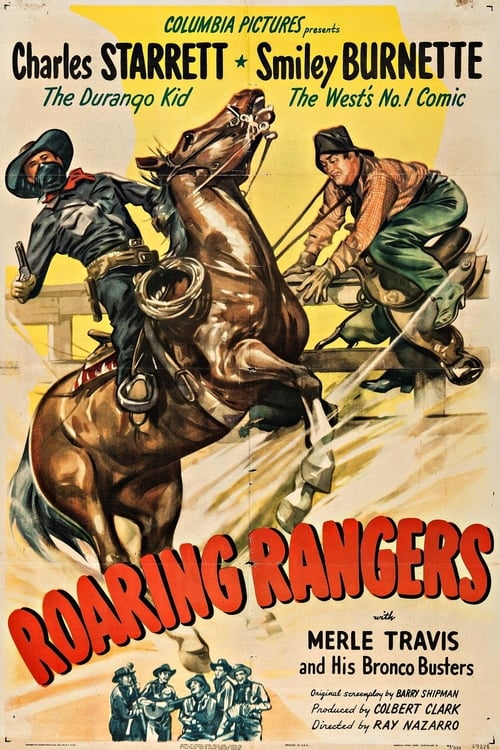
Roaring Rangers is a typical mid-century B-Western that emphasizes genre clichés over social complexity. The narrative focuses on traditional hierarchies and clear-cut morality, centered around the conflict between law enforcement and outlaws. Representation is limited by the era's conventions, focusing on male-dominated institutions and Anglo-Saxon leads, with little room for diverse perspectives.
Category Breakdown
The film does not depict any LGBTQ+ identities or same-sex relationships.
Men drive the plot, while women such as Doris are relegated to supporting roles providing emotional stakes.
The cast reflects the Anglo-Saxon norms of the 1940s, with no representation of racial diversity or multi-layered identities.
The story upholds traditional Western values of law and order, presenting a clear moral binary between lawmen and criminals.
Disabilities are not central to the characters or the plot mechanics.
Present on Screen
Limited or Absent
Official Synopsis
When Sheriff Jeff Connor of Powder River cannot stop the crime wave, his young son, Larry, writes to the Durango Kid for aid. Taggart, the saloon owner, is the secret head of the outlaws, while Connor's brother Bill is in cahoots with him. Steve Randall, the Durango Kid, and his pal, Smiley Butterbean, arrive in time to stop a stagecoach holdup, and Steve is made a deputy sheriff. Taggart has one of his men, Slade, pose as the Durango Kid and while he is speaking to the townspeople, the rest of the outlaw gang pillages the town, and this somewhat damages the Durango Kid in the eyes of Larry and his sister Doris. Steve suggests that Sheriff Connor visit the government about a railroad project, and Taggart instructs Slade and the gang leader to kill Connor on his trip back.
1946
1942

1940
1947
1947
1953
1943
1948
No reviews yet. Be the first to share your thoughts on this movie!
Use the rating form above to leave a star rating and optional review.