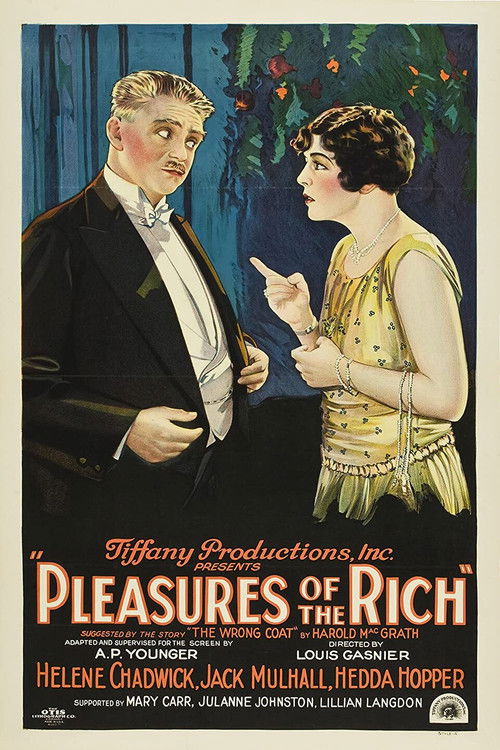
Pleasures of the Rich
1926
No user ratings available yet
Representation score: 1.3 out of 10
Representation Score
Minimal
1922
PassedDirector
Herbert Brenon
Runtime
60 minutes
Average Rating
No ratings yetNew Showbiz Analysis
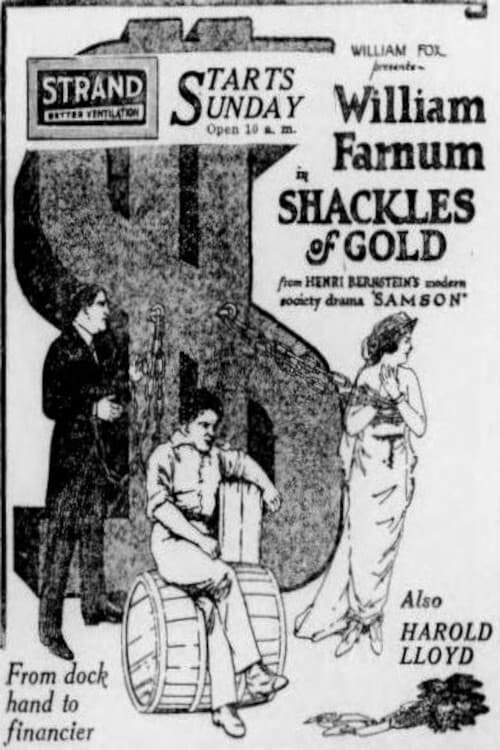
Shackles of Gold is a period-specific drama that reinforces the social hierarchies of the early 1920s. The narrative focuses on the intersection of economic success and class preservation, following a laborer's rise to Wall Street wealth. While the film critiques the emotional emptiness in arranged marriages, it does so within a narrow social lens. Characters largely adhere to the conventional gender and racial roles typical of silent-era dramatic cinema. Ultimately, the film lacks complexity in its portrayal of multiple aspects of identity. It prioritizes a traditional story of individual economic mobility over any meaningful challenge to established social norms.
Category Breakdown
The film does not depict any non-straight relationships or identities. The story revolves around a traditional marriage.
Women are portrayed mainly within a patriarchal system, serving as tools for maintaining social order. Marie is used in a loveless marriage to uphold her family's status.
The story focuses on Western social hierarchies and class mobility. There is no indication of a diverse or non-Anglo-Saxon cast.
The film explores themes of capitalism and the American Dream. It looks at the emotional costs of wealth without questioning Western social institutions.
There are no characters with visible or invisible disabilities in this production.
Present on Screen
Limited or Absent
Official Synopsis
Gibbs is a laborer at the docks who, through his hard work and good judgment, becomes a millionaire on Wall Street. He becomes acquainted with the Van Dusens, who have lost their fortune. Mrs. Van Dusen pushes her daughter Marie into a loveless marriage with Gibbs so that the family can retain its social standing. Gibbs realizes, however, that his money cannot buy his wife's affection.
1926

1920

1924
1924
1926

1932

1928
1927
No reviews yet. Be the first to share your thoughts on this movie!
Use the rating form above to leave a star rating and optional review.