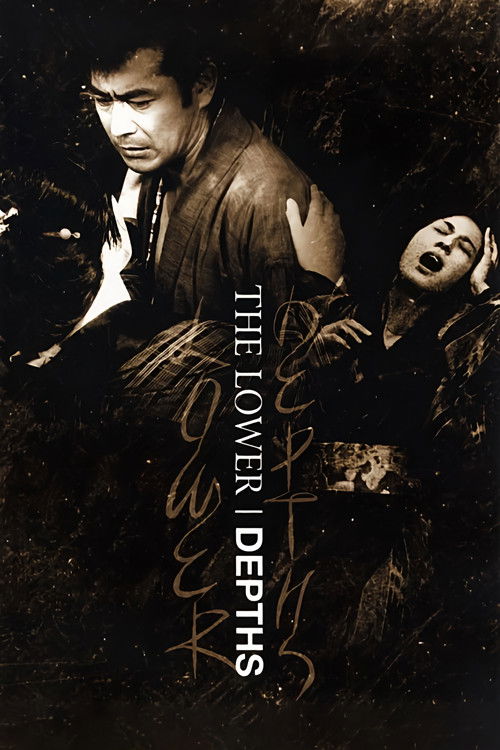
The Lower Depths
1957
No user ratings available yet
Diversity score: 5.1 out of 10
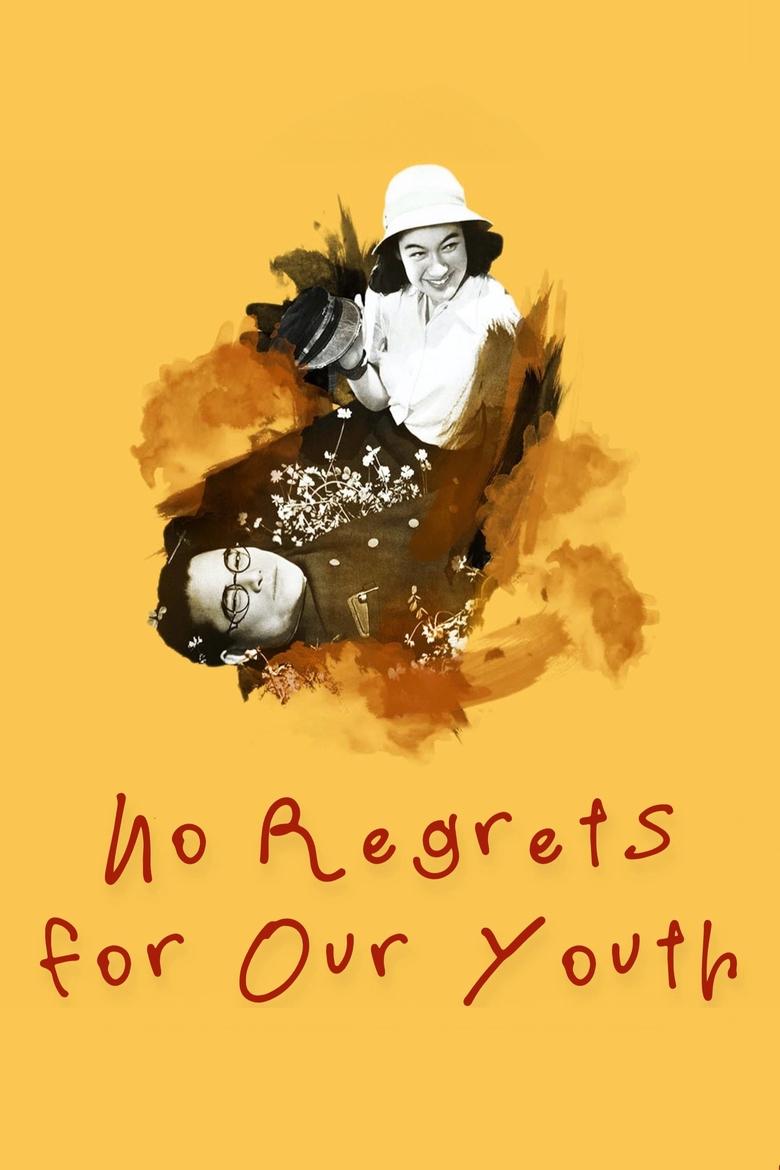
1946
PGDirector
Akira Kurosawa
Runtime
111 minutes
Average Rating
No ratings yetSynopsis
After her anti-fascist professor father is dismissed, Yukie navigates love, political repression, and wartime upheaval—ultimately forging her own path in pre- and post-WWII Japan.
Overall Score
Good
Category Breakdown
LGBTQ+ Representation
The film centers on heteronormative romantic arcs and lacks explicit non-cisnormative identity markers. However, it explores unconventional emotional bonds that disrupt traditional social expectations.
Gender Representation
Yukie serves as a resilient protagonist who drives the narrative through intellectual autonomy. She navigates wartime repression through active decision-making rather than occupying a submissive role.
Racial & Ethnic Diversity
The cast is culturally homogeneous, reflecting its specific historical Japanese context. The narrative avoids monolithic portrayals by focusing on the fractured, lived experiences of characters during wartime.
Religious & Cultural Diversity
The film critiques rigid academic and political hierarchies as oppressive forces. It prioritizes personal integrity and moral relativism over state-mandated patriotism or traditional family stability.
Disability Representation
There is no central depiction of physical or neurodivergent disability. The story focuses on the psychological toll of political repression rather than disability-centric narratives.
Strengths
Areas for Improvement
AI Analysis
Kurosawa’s drama succeeds as a work of narrative subversion by centering on a woman’s journey through the collapse of traditional Japanese institutions. The film effectively challenges era-specific expectations of female passivity and nationalistic devotion. While the film lacks explicit LGBTQ+ markers and disability-centric plots, it excels in portraying individual agency against systemic oppression. The protagonist's struggle against fascist ideologies provides a strong humanistic framework. Ultimately, the film's strength lies in its critique of established social orders, favoring personal survival and moral complexity over the preservation of nationalist hierarchies.
1957
1965

1952

1948

1955

1949
1950

1956

1957
1944
1936
1953
No reviews yet. Be the first to share your thoughts on this movie!
Use the rating form above to leave a star rating and optional review.