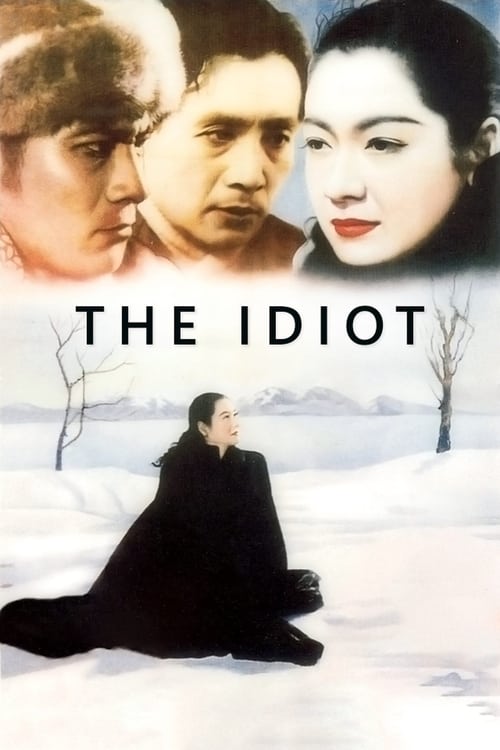
The Idiot
1951
No user ratings available yet
Representation score: 5.8 out of 10

Representation Score
Good
1957
Not RatedDirector
Akira Kurosawa
Runtime
125 minutes
Average Rating
No ratings yetNew Showbiz Analysis
Kurosawa’s adaptation is a powerful critique of systemic socioeconomic structures. By focusing on a group of underrepresented individuals in a confined boardinghouse, the film challenges conventional ideas of social order and morality. The narrative’s strength lies in its intellectual subversion and cultural critique. It avoids romanticizing hardship, instead showing theft and instability as logical responses to a predatory society. While the film lacks specific representation for LGBTQ+ identities or physical disabilities, it achieves depth through its portrayal of the psychological impact of deprivation and its rejection of traditional institutional virtues.
Category Breakdown
The film does not explicitly depict non-binary or same-sex relationships, staying within traditional heterosexual boundaries. The love triangle involving Sutekichi, Osugi, and Okayo highlights typical romantic dynamics.
Women play significant roles in the boardinghouse, particularly Osugi, the landlady, who uses her control over the living space and information to assert power, challenging traditional gender roles.
Set in 19th-century Japan, the cast is ethnically uniform. The film emphasizes the shared experience of the lower class, using it as a universal metaphor for systemic exclusion.
Kurosawa effectively critiques institutional morality through an anti-capitalist perspective. The film portrays lawlessness as a natural reaction to oppression and highlights the tension within the family unit.
The film does not feature characters with specific physical or neurodivergent disabilities. Instead, it focuses on the psychological impact and loss of dignity resulting from extreme poverty.
Present on Screen
Limited or Absent
Official Synopsis
Residents of a rundown boardinghouse in 19th-century Japan, including a mysterious old man and an aging actor, get drawn into a love triangle that turns violent. When amoral thief Sutekichi breaks off his affair with landlady Osugi to romance her younger sister, Okayo, Osugi extracts her revenge by revealing her infidelity to her jealous husband.
1951
1959
1934
1955
1964
1953
1964

1967
No reviews yet. Be the first to share your thoughts on this movie!
Use the rating form above to leave a star rating and optional review.