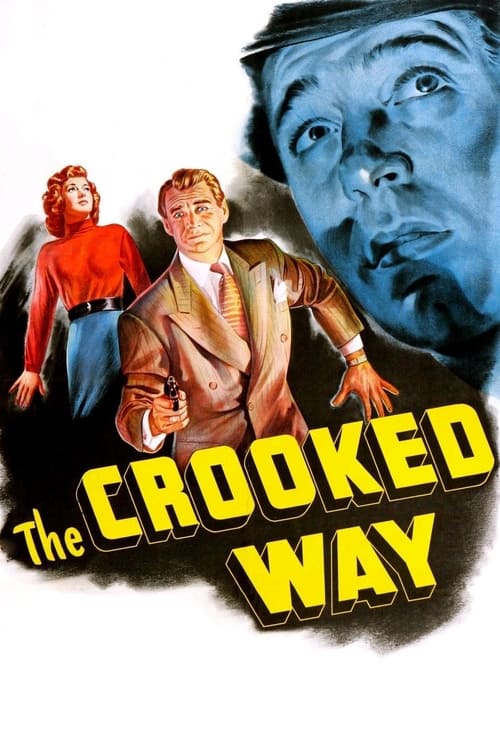
The Crooked Way
1949
No user ratings available yet
Diversity score: 3.5 out of 10

1947
NRDirector
Curtis Bernhardt
Runtime
99 minutes
Average Rating
No ratings yetSynopsis
Steven Kenet, suffering from a recurring brain injury, appears to have strangled his wife. Having confessed, he's committed to an understaffed county asylum full of pathetic inmates. There, Dr. Ann Lorrison is initially skeptical about Kenet's story and reluctance to undergo treatment. But against her better judgement, she begins to doubt his guilt.
Overall Score
Limited
Category Breakdown
LGBTQ+ Representation
The film lacks any discernible presence of non-heteronormative identities. The narrative focus remains strictly on the heteronormative domestic tragedy that drives the protagonist's story.
Gender Representation
While Dr. Ann Lorrison holds professional authority, her role is primarily reactive to the male protagonist. The narrative is driven by male trauma, with female characters serving as catalysts for male development.
Racial & Ethnic Diversity
The cast is predominantly homogeneous, reflecting the production standards of the era. There is no evidence of non-white characters in positions of agency within the asylum setting.
Religious & Cultural Diversity
The film offers a moderate critique of institutional power by framing the asylum as a potentially flawed entity. It suggests that institutional truth may conflict with individual reality.
Disability Representation
The film provides a nuanced exploration of neurodivergence through the protagonist's brain injury. It treats his condition as a source of psychological conflict rather than a mere plot device.
Strengths
Areas for Improvement
AI Analysis
High Wall is a psychological study that excels in its treatment of cognitive impairment. By centering the plot on a protagonist with a brain injury, the film explores the fragility of memory and the stability of the mind with significant depth. However, the film remains deeply rooted in the social hierarchies of 1947. It lacks intersectional representation, offering almost no visibility for LGBTQ+ identities or racial diversity, which limits its broader social scope. Ultimately, the film's strength lies in its critique of institutional authority. While it fails to disrupt traditional gender or racial norms, it successfully challenges the infallibility of the state through its portrayal of the asylum system.
1949

1950

1976
1945
1947
1951
1939

1958
1969

1958
1950
1947
No reviews yet. Be the first to share your thoughts on this movie!
Use the rating form above to leave a star rating and optional review.