Behind Locked Doors
1948
No user ratings available yet
Representation score: 2.5 out of 10
Representation Score
Limited
1945
NRDirector
Budd Boetticher
Runtime
63 minutes
Average Rating
No ratings yetNew Showbiz Analysis
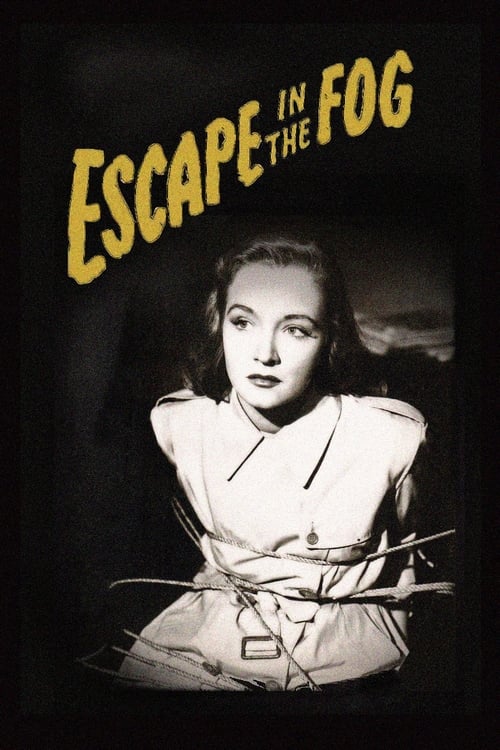
Escape in the Fog is a product of its 1945 cinematic era, adhering to traditional genre clichés and social hierarchies. The narrative relies on established professional roles and conventional gender dynamics common to mid-century crime thrillers. The film's structure prioritizes institutional stability and the rule of law. While it features a female lead, her characterization is filtered through the lens of psychological vulnerability, a frequent cliché of the period. Ultimately, the film offers little in the way of diverse representation. It functions as a standard mystery that reinforces the social norms and homogeneous casting patterns of the mid-1940s.
Category Breakdown
The film does not include any characters with non-straight sexual orientations or gender identities. The central relationship revolves around a female protagonist and a male federal agent.
A military nurse serves as the main character, offering a professional female perspective. However, her role is defined by a nervous breakdown, a common cliché that links women's ability to drive the story to psychological instability.
The setting includes military and federal personnel, suggesting a conventional mid-century ensemble. There is no indication of racial diversity or the subversion of typical Anglo-centric casting norms.
The story emphasizes mid-century institutional stability through its focus on military and federal law enforcement. It operates within established social hierarchies without challenging them.
Mental health issues are used primarily as a plot device to create suspense. The protagonist's nervous breakdown serves to justify her heightened perceptions rather than exploring her lived experience.
Present on Screen
Limited or Absent
Official Synopsis
A military nurse recovering at an inn from a nervous breakdown keeps having dreams where she sees two men trying to murder a third. When she meets a man who is a federal agent at the inn, she is astounded to discover that he is the man in her dream who is the intended murder victim.
1948
1949
1956
1950
1954
1947
1949
1946
No reviews yet. Be the first to share your thoughts on this movie!
Use the rating form above to leave a star rating and optional review.