Prison Break
1938
No user ratings available yet
Representation score: 0.5 out of 10
Representation Score
Minimal
1939
NRDirector
John Brahm
Runtime
65 minutes
Average Rating
No ratings yetNew Showbiz Analysis
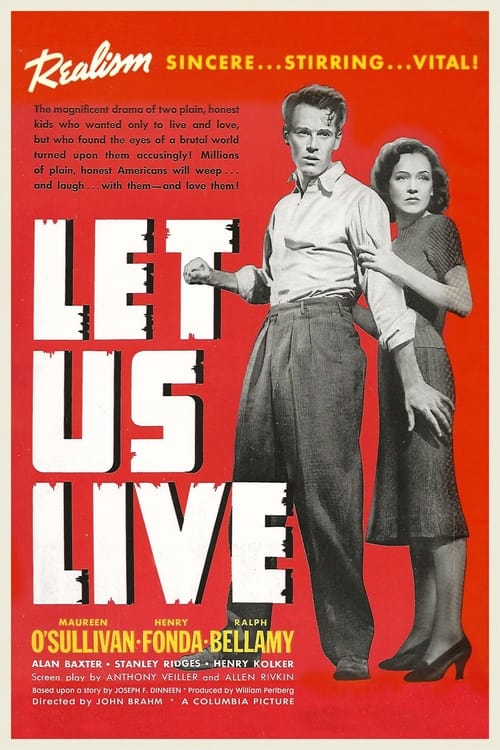
Let Us Live is a period-specific drama that prioritizes a critique of political totalitarianism over social diversity. While the film successfully challenges the integrity of state institutions, it remains constrained by the demographic and social norms of its era. The narrative focuses on the tension between individual morality and state tyranny, but it lacks the demographic breadth and identity-based complexity required for a higher diversity rating.
Category Breakdown
The film does not include any LGBTQ+ characters or representations of same-sex relationships. It follows the assumption that everyone is straight or cisgender.
Mary takes a leading role by investigating her fiancé's innocence, but her actions are still defined by her relationship to the male protagonist. Her strength is shown through her domestic loyalty and emotional support.
The cast is predominantly white, reflecting the production standards of 1939. There is no evidence of racial blending or casting actors with diverse backgrounds.
The story offers a sophisticated critique of state-mandated authority and totalitarian corruption. It explores the moral weight of silence and the erosion of civil liberties under systemic oppression.
There is no evidence of characters with visible or invisible disabilities being portrayed with real power or as central to the narrative arc.
Present on Screen
Limited or Absent
Official Synopsis
When a confused eyewitness identifies New York City cabbie Brick Tennant as a killer, he is sentenced to death for a murder that he wasn't involved in. Though no one is willing to listen to the innocent prisoner's pleas for freedom, Brick's faithful fiancée, Mary, knows that her lover is innocent because she was with him when the crime was committed. As the scheduled execution draws ever nearer, Mary begins to investigate the murder herself.
1938

1930
1946
1937

1950
1948

1939
1947
No reviews yet. Be the first to share your thoughts on this movie!
Use the rating form above to leave a star rating and optional review.