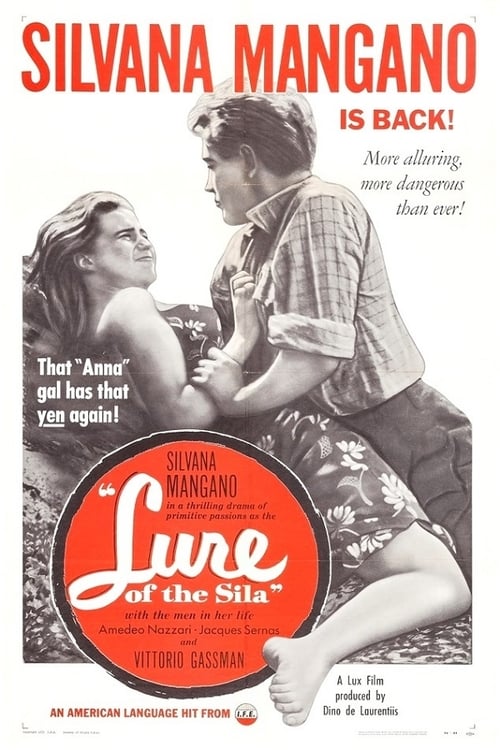
Lure of the Sila
1949
No user ratings available yet
Representation score: 2.5 out of 10

Representation Score
Limited
1954
Director
Mario Soldati
Runtime
94 minutes
Average Rating
No ratings yetNew Showbiz Analysis
Mario Soldati’s drama subverts the typical romantic melodrama by focusing on a woman's pragmatic survival. Nives is portrayed as a proactive protagonist driven by economic needs rather than a passive figure. While the film offers a nuanced exploration of women's ability to drive the story, it remains constrained by the demographic and cultural limitations of 1950s European cinema. The narrative is set in a homogeneous social context. Overall, the work provides a progressive portrayal of female autonomy, though it lacks modern characters who reflect more than one aspect of diversity.
Category Breakdown
The film centers on heterosexual and cisgender relationships. It does not include any characters with non-cisgender identities or suggest any queer subtext.
Nives prioritizes economic survival over romantic passivity, showing a significant role in driving the story. However, her character development is largely shaped by her relationships with men and her role as a mother.
The film depicts a homogeneous mid-century Italian community focused on local peasant life. There is no depiction of racial blending or diverse casting.
The story examines moral ambiguity and the breakdown of traditional family structures. It challenges idealized narratives through themes of betrayal and tragic loss.
The narrative does not include characters with physical or neurodivergent disabilities.
Present on Screen
Limited or Absent
Official Synopsis
When peasant girl Nives is deserted by smuggler Gino Lodi, she betrays him to the police. Police officer Enzo Cinti, who loves Nives, traces her to the Po River cane-fields, where she is working as a cutter to support herself and an infant son, and warns her that Gino has escaped from prison and is seeking revenge. She rejects his offer to protect her. Gino finds Nives, mourning the drowning death of their son. He surrenders himself to the police and then walks at Nives' side in the funeral procession.
1949

1957

1954

1949

1942

1970

1946
1958
No reviews yet. Be the first to share your thoughts on this movie!
Use the rating form above to leave a star rating and optional review.