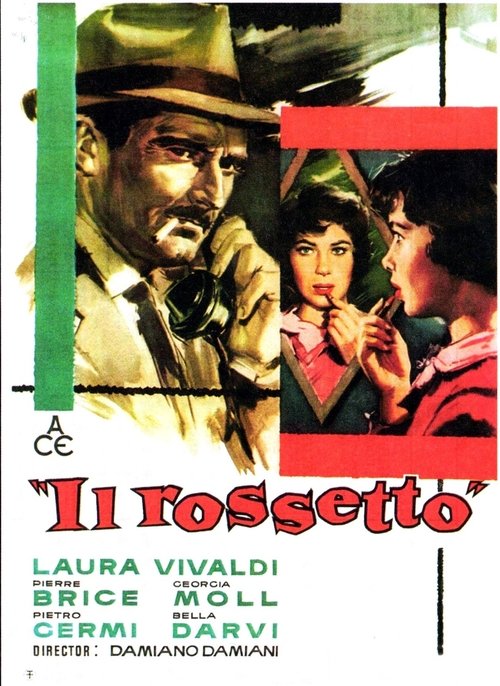
Lipstick
1960
No user ratings available yet
Representation score: 6.5 out of 10

Representation Score
Fair
1949
Not RatedDirector
Giuseppe De Santis
Runtime
109 minutes
Average Rating
No ratings yetNew Showbiz Analysis
Bitter Rice is a landmark of Italian Neorealism that prioritizes class struggle over traditional identity politics. It succeeds by centering the female experience within a labor-intensive environment, subverting traditional gender roles. While the film lacks modern markers like LGBTQ+ or racial diversity, its strength lies in its anti-capitalist framework. It effectively highlights class hierarchies and systemic oppression.
Category Breakdown
The story focuses on heterosexual relationships and does not include any non-cisgender identities or narratives.
The film centers on female rice workers, emphasizing their physical labor and survival instincts. Characters like Silvana play a significant role in driving the plot.
The cast is ethnically uniform, reflecting the historical period of Italian reconstruction. It uses socioeconomic class differences for its social commentary.
The narrative critiques traditional power structures and the exploitation of seasonal laborers. It prioritizes the lived experiences of the working class over religious or moral dictates.
The film does not feature characters with disabilities as central to the narrative arc.
Present on Screen
Limited or Absent
Official Synopsis
Francesca and Walter are two-bit criminals in Northern Italy, and, in an effort to avoid the police, Francesca joins a group of women rice workers. She meets the voluptuous peasant rice worker, Silvana, and the soon-to-be-discharged soldier, Marco. Walter follows her to the rice fields, and the four characters become involved in a complex plot involving robbery, love, and murder.
1960
1931

1951

1943

1952
1949
1955

1970
No reviews yet. Be the first to share your thoughts on this movie!
Use the rating form above to leave a star rating and optional review.