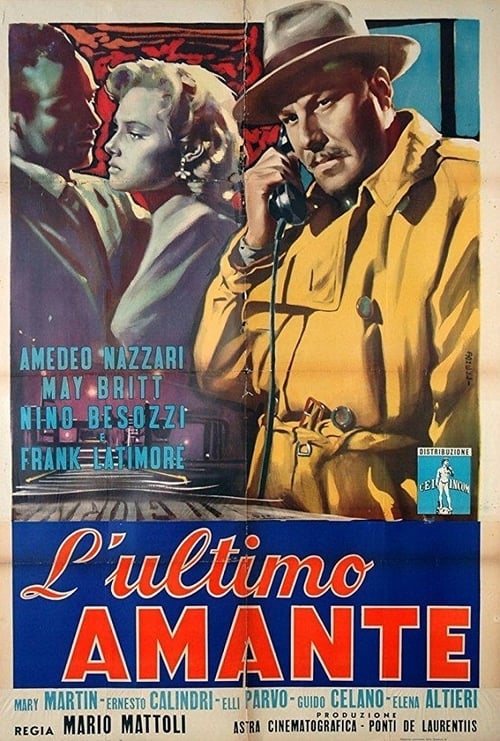
L'ultimo amante
1955
No user ratings available yet
Representation score: 2.2 out of 10
Representation Score
Fair
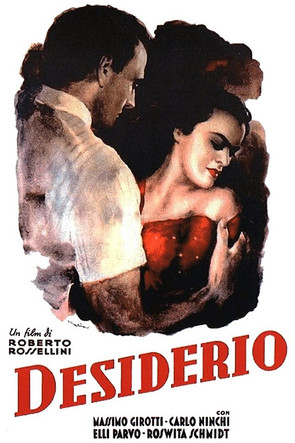
1946
Director
Marcello Pagliero, Roberto Rossellini
Runtime
91 minutes
Average Rating
No ratings yetNew Showbiz Analysis
Desire is a Neorealist exploration of human vulnerability and systemic hardship. It successfully deconstructs traditional family hierarchies, centering a female protagonist's struggle against patriarchal exploitation and social isolation. However, the film's historical and geographical specificity limits its diversity in terms of race and LGBTQ+ identities. The narrative remains confined to a homogeneous, straight-focused social framework typical of its era and setting. Ultimately, the film's strength lies in its progressive critique of social structures, rejecting moralistic resolutions in favor of a complex, subjective look at the failures of post-war society.
Category Breakdown
The film does not depict LGBTQ+ identities or non-straight relationships. It centers on interpersonal conflicts within a traditional family and the protagonist's struggle with sexual exploitation.
Paola is a central character navigating a landscape of male-driven aggression and exploitation. The film critiques patriarchal pressures by showing male figures as sources of blackmail and predatory lust.
Set in the Abruzzi mountains of 1946 Italy, the cast is ethnically uniform. The narrative is grounded in a specific localized socio-economic reality without racial blending.
The story offers a critical view of traditional institutions like the family and village structures. It explores existentialist themes, framing these social systems as oppressive forces that deny individual redemption.
While the film explores profound psychological distress and the mental toll of isolation, there are no specific depictions of visible or invisible disabilities.
Present on Screen
Limited or Absent
Official Synopsis
Paola, a Milan call girl, returns home to her village in the Abruzzi mountains in an attempt to go straight. Rejected by her father, blackmailed by a former lover, and lusted after by her brother-in-law, she turns to her beloved sister for support. Denied succor, like so many of Rossellini’s isolated figures, Paola awaits the arrival of her fiancé, who has offered her a new start, but instead decides that life is untenable.
1955

1957
1940
1961
1954
1970

1954
1964
No reviews yet. Be the first to share your thoughts on this movie!
Use the rating form above to leave a star rating and optional review.