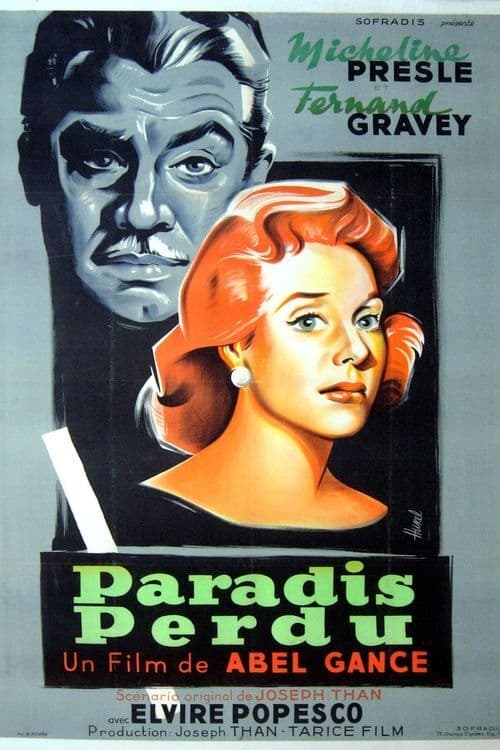
Four Flights to Love
1939
No user ratings available yet
Diversity score: 2.4 out of 10

1941
Director
Abel Gance
Runtime
140 minutes
Average Rating
No ratings yetSynopsis
Vénus aveugle (Blind Venus) is a 1941 French film melodrama, directed by Abel Gance, and one of the first films to be undertaken in France during the German occupation. Although the film is not set in any specified period, Gance wanted it to be seen as relevant to the contemporary situation in France. He wrote, "...La Vénus aveugle is at the crossroads of reality and legend... The heroine ... gradually sinks deeper and deeper into despair. Only when she has reached the bottom of the abyss does she encounter the smile of Providence that life reserves for those who have faith in it, and she can then go serenely back up the slope towards happiness. If I have been able to show in this film that elevated feelings are the only force that can triumph over Fate, then my efforts will not have been in vain."
Overall Score
Fair
Category Breakdown
LGBTQ+ Representation
The film follows a traditional romantic melodrama structure. There is no visible evidence of non-heteronormative identities or same-sex intimacy within the narrative.
Gender Representation
The story centers on a female protagonist's psychological struggle. Her journey from despair toward happiness suggests a level of agency beyond a purely decorative role.
Racial & Ethnic Diversity
The cast appears homogeneous, reflecting the demographic realities of occupied France in 1941. There is no evidence of racial diversity or non-white casting.
Religious & Cultural Diversity
The narrative utilizes a spiritual framework centered on faith and Providence. It emphasizes subjective morality and elevated feelings rather than anti-institutional critiques.
Disability Representation
The title suggests a potential engagement with blindness. However, it is unclear if this is a nuanced depiction or a symbolic plot device common to the era.
Strengths
Areas for Improvement
AI Analysis
Abel Gance’s melodrama focuses heavily on a singular female protagonist's existential crisis. While the film provides a central role for a woman to navigate fate, the narrative remains rooted in the traditional social and demographic constraints of 1941 France. The film lacks visible LGBTQ+ representation and racial diversity, mirroring the era's production context. Its engagement with disability appears potentially metaphorical, tied to the title's themes of blindness and providence. Ultimately, the work prioritizes spiritual and emotional themes over diverse social representation, resulting in a score that reflects a conventional, period-specific worldview.
1939
1946
2012
1999

1946
1971
1927
1923
1948
1938

1995
1958
No reviews yet. Be the first to share your thoughts on this movie!
Use the rating form above to leave a star rating and optional review.