Jules and Jim
1962
No user ratings available yet
Representation score: 4.9 out of 10
Representation Score
Fair
2012
RDirector
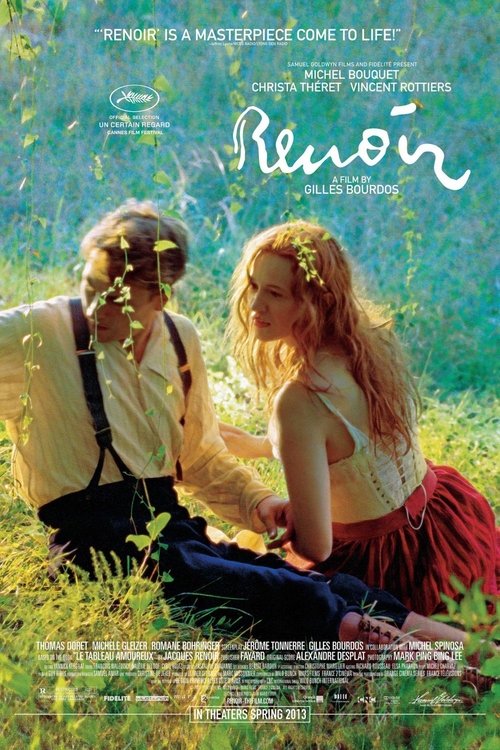
Gilles Bourdos
Runtime
111 minutes
Average Rating
No ratings yetNew Showbiz Analysis
Renoir presents a sophisticated historical reconstruction that delves into specific character struggles. It succeeds by treating disability and women's ability to drive the story with nuance, moving beyond superficial clichés to show how physical pain and intellectual vitality drive the narrative. However, the film is constrained by its adherence to the social and demographic norms of 1915. It serves as a period piece reflecting the era's homogeneity rather than actively challenging it. Ultimately, the film offers meaningful character studies within a restrictive historical context, though it lacks broader multi-layered or LGBTQ+ representation.
Category Breakdown
The film focuses on the heterosexual and cisgender relationships of the early 20th century. There is no evidence of LGBTQ+ identities or same-sex intimacy among the main characters.
The narrative challenges traditional gender roles by highlighting the active role of female models in the artistic process. These women are shown as dynamic participants rather than passive subjects.
The cast reflects the homogeneous demographics of the French countryside during the Belle Époque. It lacks modern multi-layered casting but highlights the socioeconomic differences between classes.
The story examines the tension between high art and the realities of a world at war. It remains rooted in a traditional Western historical perspective.
Pierre-Auguste Renoir’s struggle with rheumatoid arthritis is woven into his identity as an artist. His physical limitations inform his creative resilience rather than serving as a mere plot device.
Present on Screen
Limited or Absent
Official Synopsis
In the French Riviera in the summer of 1915, Jean Renoir, son of the Impressionist painter Pierre-Auguste, returns home to convalesce after being wounded in World War I. At his side is Andrée, a young woman who rejuvenates, enchants, and inspires both father and son.
1962
1971
1986
1996

2006
2004
1997

2017
No reviews yet. Be the first to share your thoughts on this movie!
Use the rating form above to leave a star rating and optional review.