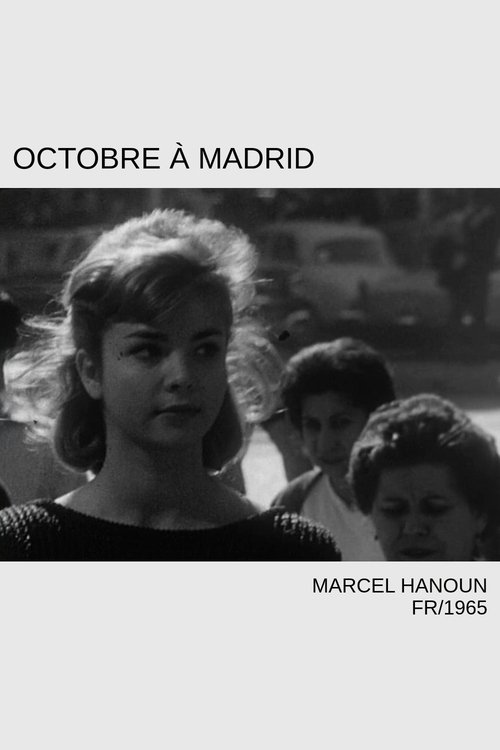
October in Madrid
1965
No user ratings available yet
Diversity score: 5.8 out of 10
No Poster Available
1957
Director
Len Lye
Runtime
1 minutes
Average Rating
No ratings yetSynopsis
Intended as a publicity film for Chrysler, Rhythm uses rapid editing to speed up the assembly of a car, synchronizing it to African drum music. The sponsor was horrified by the music and suspicious of the way a worker was shown winking at the camera; although Rhythm won first prize at a New York advertising festival, it was disqualified because Chrysler had never given it a television screening. P. Adams Sitney wrote, “Although his reputation has been sustained by the invention of direct painting on film, Lye deserves equal credit as one of the great masters of montage.” And in Film Culture, Jonas Mekas said to Peter Kubelka, “Have you seen Len Lye’s 50-second automobile commercial? Nothing happens there…except that it’s filled with some kind of secret action of cinema.” - Harvard Film Archive
Overall Score
Fair
Category Breakdown
LGBTQ+ Representation
The film is a non-narrative, experimental short focused on mechanical assembly. It contains no character depictions or interpersonal dynamics to address orientation.
Gender Representation
The film centers on machines and industrial processes rather than human agency. The absence of female presence reflects mid-century gendered labor hierarchies.
Racial & Ethnic Diversity
Lye subverts expectations by synchronizing American industrial assembly with African drum music. This introduces a non-Western rhythmic framework into a Western capitalist context.
Religious & Cultural Diversity
The film uses rhythmic structures that challenged the sponsor's desire for sanitized corporate messaging. It prioritizes experimental expression over standard commercial tropes.
Disability Representation
As an abstract, kinetic study of motion and machinery, the film does not feature human characters. It does not address physical disability or neurodivergence.
Strengths
Areas for Improvement
AI Analysis
Rhythm is a seminal work of experimental montage that prioritizes sensory experience over traditional industrial documentary formats. Its significance lies in its narrative architecture and sensory subversion rather than character-driven depth. The film's primary progressive value is its refusal to conform to mid-century Western aesthetic expectations. By integrating African percussion into the visual rhythm of American manufacturing, Lye bridged disparate cultural textures. Ultimately, the work functions as a disruption of the era's standard commercial tropes. The tension between the artist's vision and the sponsor's discomfort highlights its role in challenging established corporate media hierarchies.
1965
1957
1996

1927
1929
1921
1965
1928
1975
1961
1961
2000
No reviews yet. Be the first to share your thoughts on this movie!
Use the rating form above to leave a star rating and optional review.