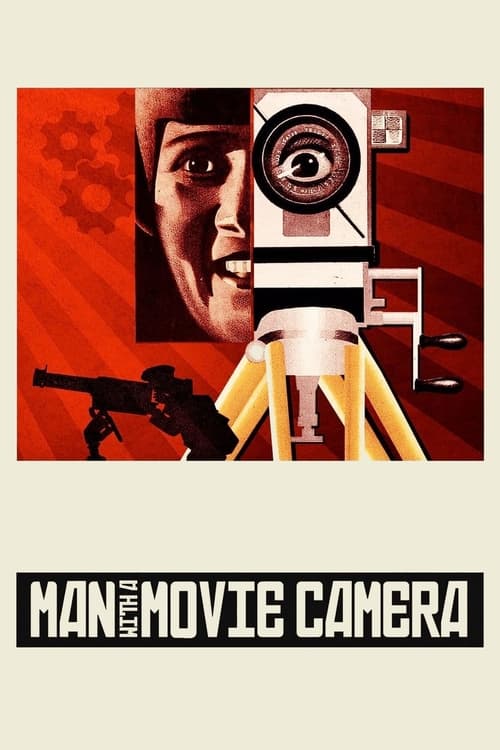
Man with a Movie Camera
1929
No user ratings available yet
Representation score: 3.9 out of 10

Representation Score
Limited
1927
Not RatedDirector
Walter Ruttmann
Runtime
69 minutes
Average Rating
No ratings yetNew Showbiz Analysis
Walter Ruttmann’s masterpiece is a groundbreaking example of cinematic formalism that captures the rhythmic, industrial pulse of 1920s Berlin. By focusing on the mechanical workings of the city rather than individual stories, the film offers a unique modernist perspective. However, this emphasis on the city's mechanical processes leads to a lack of depth regarding different aspects of identity. The film upholds the social and demographic norms of the Weimar Republic, presenting a uniform view of urban life without challenging traditional hierarchies or diverse representations.
Category Breakdown
The film uses a non-narrative, montage-based structure that highlights the collective energy of the city. It doesn't provide enough character development or dialogue to clearly represent LGBTQ+ identities.
Gender roles are shown through the functional positions within the urban environment. Women are often seen in domestic or service roles, while men are in industrial or professional positions. The film observes these roles without challenging the existing hierarchy.
The montage captures a mostly European urban landscape. While it shows different socioeconomic levels, it lacks significant representation of non-white populations.
The film takes a secular approach, focusing on modernity and the machine age. It downplays traditional institutions like churches or families, instead emphasizing the city itself as the main entity.
The film centers on the fast-paced movement of crowds and industrial efficiency. It does not show any clear depiction of visible or invisible disabilities, emphasizing a standard of physical activity and productivity.
Present on Screen
Limited or Absent
Official Synopsis
A day in the city of Berlin, which experienced an industrial boom in the 1920s, and still provides an insight into the living and working conditions at that time. Germany had just recovered a little from the worst consequences of the First World War, the great economic crisis was still a few years away and Hitler was not yet an issue at the time.
1929

1983
1921
1926

1928
1929
1931

1928
No reviews yet. Be the first to share your thoughts on this movie!
Use the rating form above to leave a star rating and optional review.