Santa Fe Passage
1955
No user ratings available yet
Diversity score: 1.9 out of 10
1942
ApprovedDirector
William Witney
Runtime
55 minutes
Average Rating
No ratings yetSynopsis
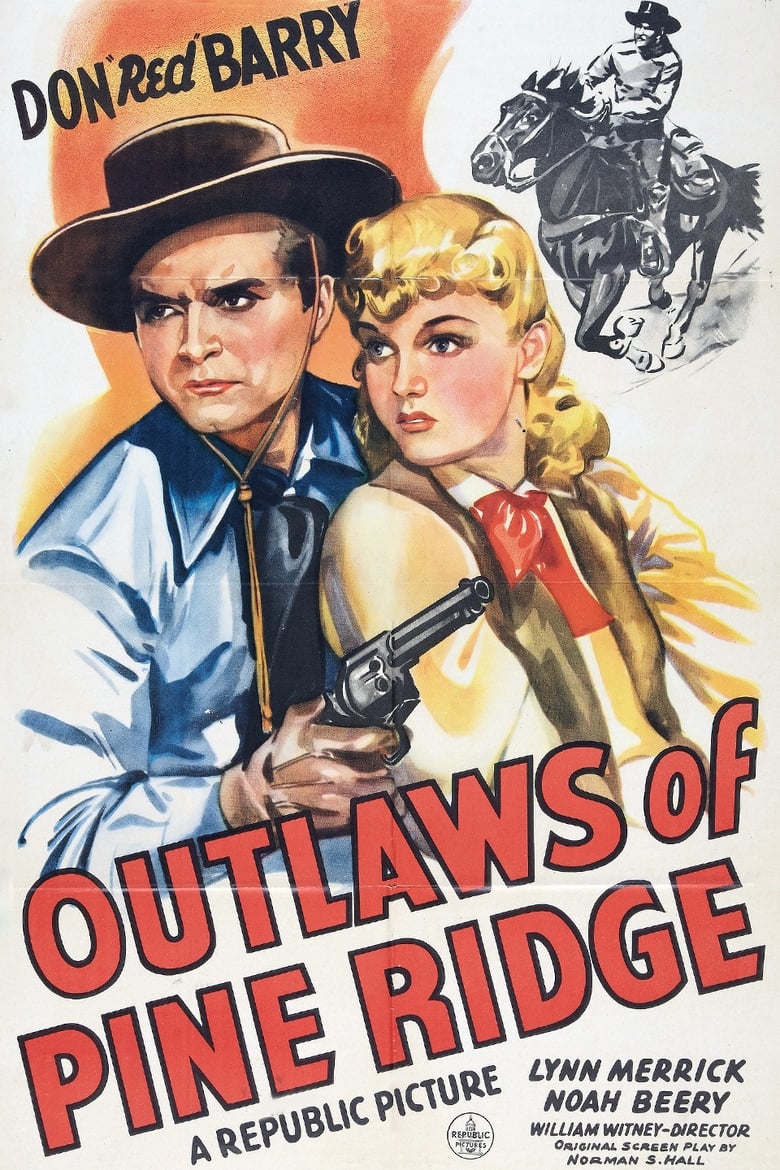
Director William Witney puts his distinctive stamp on the Don "Red" Barry western Outlaws of Pine Ridge by opening the picture with a body sailing through the plate-glass window of a frontier saloon. Barry stars as gun-slingin' Chips Barrett, who makes it his mission in life to prevent the inaccurately nicknamed Honest John Hollister (Noah Beery Sr.) from becoming territorial governor. Complicating things is the fact that Chips is in love with Honest John's daughter Ann.
Overall Score
Limited
Category Breakdown
LGBTQ+ Representation
The film adheres to standard 1940s heteronormative structures. The plot centers on a traditional romantic conflict between Chips Barrett and Ann Hollister, with no queer narratives present.
Gender Representation
The story follows a hero-driven model where male agency dominates. While Ann is a central figure, her role is defined by her relationships to the hero and antagonist.
Racial & Ethnic Diversity
The narrative reflects the era's typical lack of ethnic breadth. It relies on standard Western archetypes within a frontier setting, showing no evidence of diverse casting.
Religious & Cultural Diversity
The film operates within traditional Western morality and frontier institutions. It focuses on a struggle between honest and dishonest actors rather than critiquing social structures.
Disability Representation
There are no visible or invisible disabilities depicted. No characters with disabilities are central to the film's narrative arcs.
Strengths
Areas for Improvement
AI Analysis
Outlaws of Pine Ridge is a quintessential B-Western that prioritizes genre conventions over social complexity. The narrative is built around a traditional masculine hero, Chips Barrett, whose primary motivations are political integrity and romantic pursuit. This structure reinforces the era's standard social hierarchies. Representation is limited by the film's adherence to 1940s archetypes. The female lead serves primarily as a catalyst for the male protagonist's actions, and the cast lacks ethnic or cultural breadth. The film functions as a straightforward morality tale rather than a nuanced exploration of identity. Ultimately, the film provides a period-typical experience. It focuses on kinetic action and established frontier tropes, offering little to no disruption of conventional social or gendered norms.
1955
1950
1945
1941
1944
1941
1944
1950
1936
1950
1930

1945
No reviews yet. Be the first to share your thoughts on this movie!
Use the rating form above to leave a star rating and optional review.