
Wells Fargo Days
1944
No user ratings available yet
Representation score: 0.6 out of 10
Representation Score
Minimal
1944
ApprovedDirector
Howard Bretherton
Runtime
56 minutes
Average Rating
No ratings yetNew Showbiz Analysis
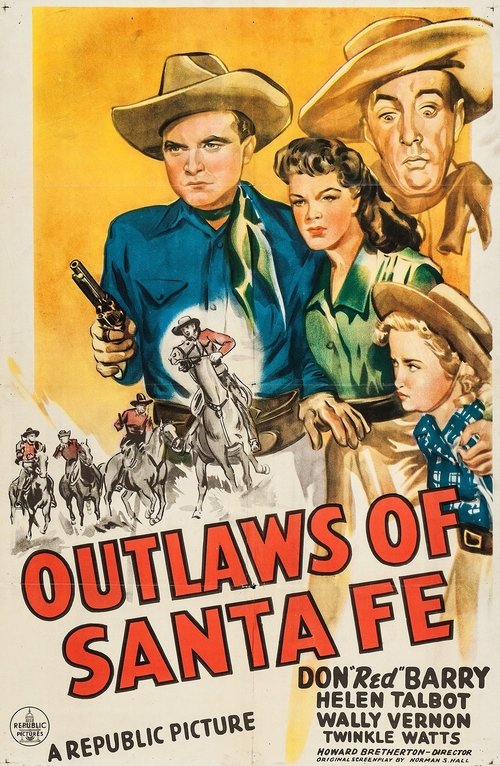
Outlaws of Santa Fe is a classic Western film that tells a simple story of redemption. It focuses on the main character's journey from being an outlaw to becoming a lawman, which reinforces traditional family values and clear moral lines. The movie follows the typical structure of mid-century Western films, emphasizing stability and strong, traditional masculinity. It doesn't explore complex social issues or diverse perspectives, sticking to a straightforward, Western-centric view of justice. Ultimately, the film serves as a historical example of the B-Western genre, offering a familiar resolution through the enforcement of established authority.
Category Breakdown
The film does not include any LGBTQ+ characters or identities that don't follow the traditional gender norms. The world shown in the movie assumes everyone is straight and cisgender.
Men play the main roles in the story, focusing on fighting and brotherhood. Women have minor roles and are mostly secondary to the male characters.
The film features a mostly white cast, typical of its time. There are no significant roles for characters from diverse racial backgrounds.
The movie supports traditional Western values and the idea that laws are important. It promotes a society where families and traditions are key to restoring order.
The film does not include any characters with visible or hidden disabilities. Disabilities are not part of the story's themes.
Present on Screen
Limited or Absent
Official Synopsis
After bank robber Bob Hackett (Don "Red" Barry) learns that his real father was a marshal, he reforms and travels with his pal Buckshot (Wally Vernon) to Santa Fe, where his father was killed. When he stands up to rustlers working for Henry Jackson (Herbert Heyes), Hackett is made the new marshal.
1944
1939
1937

1939
1943
1958
1934
1946
No reviews yet. Be the first to share your thoughts on this movie!
Use the rating form above to leave a star rating and optional review.