
It's All Brazil
1997
No user ratings available yet
Diversity score: 6.5 out of 10
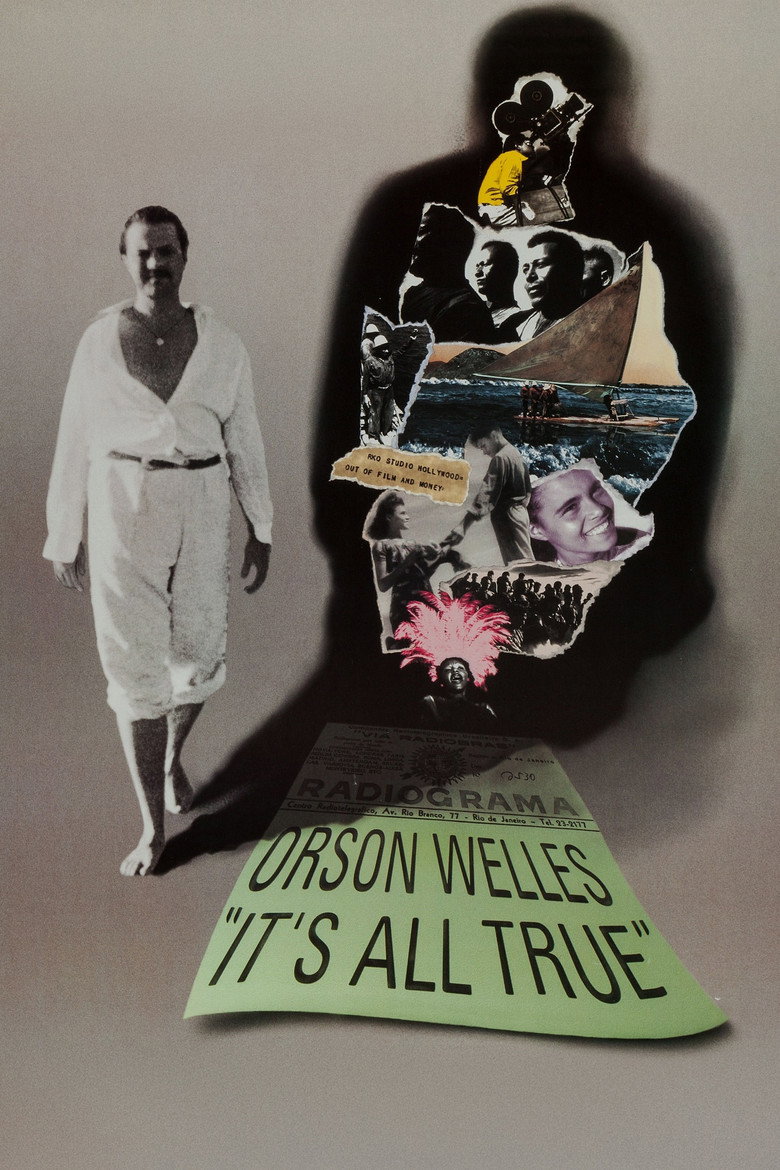
1993
GDirector
Bill Krohn, Myron Meisel, Richard Wilson, Orson Welles, Norman Foster
Runtime
89 minutes
Average Rating
No ratings yetSynopsis
A documentary about Orson Welles's unfinished three-part film about South America.
Overall Score
Good
Category Breakdown
LGBTQ+ Representation
The documentary focuses on ethnographic and socio-political realities rather than scripted queer narratives. There is no evidence of derogatory tropes or the reinforcement of heteronormative hierarchies.
Gender Representation
The film avoids artificial gender hierarchies by exploring communal and indigenous social structures. However, it maintains a neutral, observational stance without specific evidence of women driving central narrative arcs.
Racial & Ethnic Diversity
The narrative centers on the agency of Afro-Brazilian and indigenous populations. By focusing on the Amazon and urban favelas, the film disrupts the traditional Western gaze.
Religious & Cultural Diversity
The film uses a post-colonial lens to critique Western industrialization and capitalism. It prioritizes the subjective truths of marginalized groups over Westernized developmental standards.
Disability Representation
There is no significant evidence regarding the portrayal of specific disabilities within the available documentation.
Strengths
Areas for Improvement
AI Analysis
It's All True serves as a powerful deconstruction of traditional developmentalist narratives. By centering Afro-Brazilian and indigenous voices, the film successfully disrupts conventional ethnographic tropes and challenges the perceived inevitability of Western progress. The work excels in its racial and cultural representation, framing the tension between industrial expansion and indigenous autonomy as a systemic struggle. It effectively shifts the lens away from Anglo-centric perspectives to highlight marginalized communities. While the film is culturally rich, it remains largely observational regarding gender and LGBTQ+ identities. The lack of explicit depictions of non-cisnormative identities or women-led narratives results in a more neutral score for those categories.
1997

1999
2008
2020

1967
1998

1994

1981

1963
2016
1980

2019
No reviews yet. Be the first to share your thoughts on this movie!
Use the rating form above to leave a star rating and optional review.