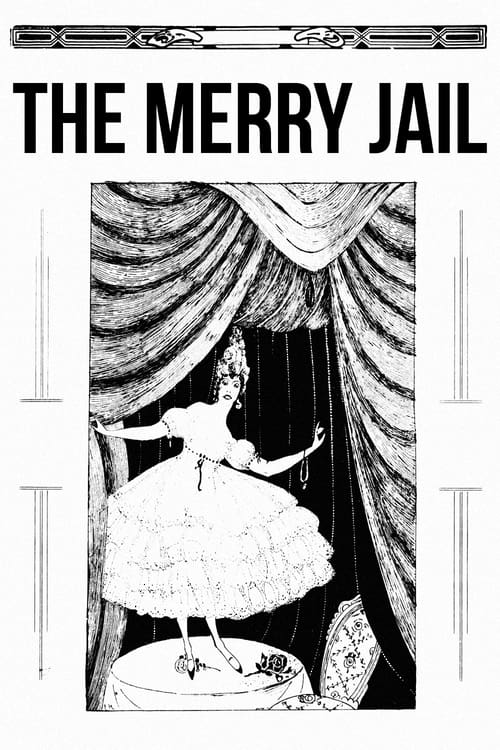
The Merry Jail
1917
No user ratings available yet
Diversity score: 2.2 out of 10

1920
PassedDirector
Edward Dillon
Runtime
50 minutes
Average Rating
No ratings yetSynopsis
Belle Johnson, a flirtatious widow in Paris for the carnival season, finds that the marriage of her sister Grace and Frank Morley is headed for trouble. Frank is very absorbed in his business, thus Grace has begun an affair with the handsome Sir Lionel Heathcote. Belle tries to save her sister from eloping with Heathcote by making him promise to drop the affair and return to England. Finding them going ahead with their plans, however, she steps in, at the risk of losing the respect of Jim Morley, Frank's brother, who has just returned from South America to ask Belle to marry him. Discovering Belle at Heathcote's apartment, Frank leads Jim to believe that she has been entirely too frisky, but Grace confesses the truth to her husband, rather than see her sister lose the man she loves. Finally, Belle and Jim go off on their honeymoon. It is a lost film.
Overall Score
Limited
Category Breakdown
LGBTQ+ Representation
The film lacks evidence of non-heteronormative identities or same-sex intimacy. The narrative follows traditional romantic structures centered on heterosexual marriage and infidelity.
Gender Representation
Belle Johnson acts as a proactive protagonist navigating interpersonal crises. Grace’s decision to confess her affair challenges the trope of the passive female character, exploring friction between desire and stability.
Racial & Ethnic Diversity
The cast appears predominantly Western and Anglo-centric. While a character returns from South America, there is no indication of diverse casting or non-white identities in the central arc.
Religious & Cultural Diversity
The story explores subjective morality by framing infidelity as a central plot driver. However, the traditional honeymoon resolution reasserts conventional social structures and rigid moralism.
Disability Representation
There is no mention of characters with visible or invisible disabilities within the available narrative.
Strengths
Areas for Improvement
AI Analysis
The film serves as a period comedy that utilizes gendered social friction to drive its plot. It offers moderate agency to its female leads, challenging certain hierarchies regarding female conduct and truth-telling. However, the work remains largely anchored in the heteronormative and Eurocentric frameworks typical of 1920s cinema. The narrative focuses on Western social mores and traditional marital structures. Ultimately, while the film provides nuanced female characterization, it lacks significant breadth in terms of racial, cultural, or LGBTQ+ representation.
1917
1919
1926
1924
1929
1914
1936
1923
1931
1914
1908
1913
No reviews yet. Be the first to share your thoughts on this movie!
Use the rating form above to leave a star rating and optional review.