
Jilted Janet
1918
No user ratings available yet
Representation score: 1.0 out of 10
Representation Score
Minimal
1919
ApprovedDirector
Harry L. Franklin
Runtime
50 minutes
Average Rating
No ratings yetNew Showbiz Analysis
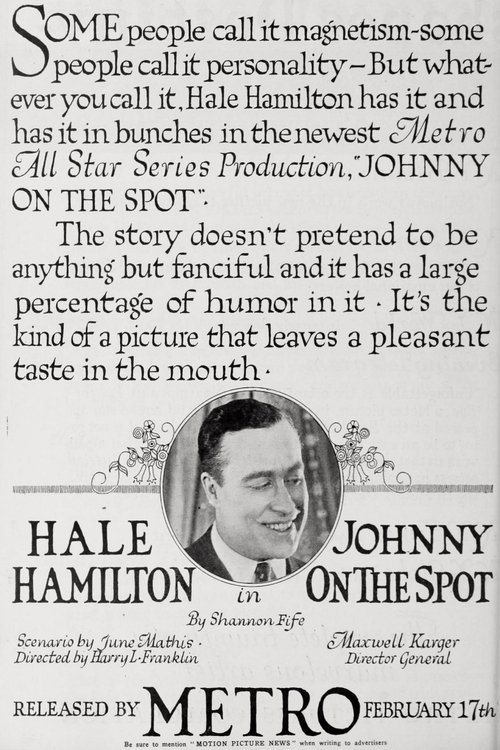
Johnny-on-the-Spot is a product of early 20th-century mainstream cinema, adhering to the social norms of its time. The narrative follows a standard hero's journey focused on romantic pursuits and class-based clichés. The film lacks progressive representation, focusing instead on traditional Western values such as marriage and wealth accumulation. Character dynamics reinforce conventional gender roles rather than challenging them. Ultimately, the film serves as a conventional silent comedy that reflects the limited multi-layered framework of 1919 filmmaking.
Category Breakdown
The film does not include any characters with non-straight or non-cisgender identities. The plot revolves around a traditional romance between a male and a female character.
Anne Travers has economic power due to her wealth. However, the story relies on a male hero rescuing her from a fraudulent suitor, reinforcing traditional gender roles.
The story likely reflects the homogeneous casting practices of 1919. There is no indication of non-white or non-Anglo-Saxon characters in the narrative.
The film upholds Western social norms related to marriage and wealth. The protagonist's actions are driven by individualistic capitalist goals rather than cultural critique.
There is no information about the depiction of physical or neurodivergent identities in this work.
Present on Screen
Limited or Absent
Official Synopsis
Aspiring author Johnny Rutledge believes in taking things easy. When he gets evicted for giving his last $10 to a fellow writer, Anne Travers, he sets out on a wild mission to stop her from marrying a fraudulent suitor and win her fortune.
1918
1926

1919

1928

1929

1923
1927

1920
No reviews yet. Be the first to share your thoughts on this movie!
Use the rating form above to leave a star rating and optional review.