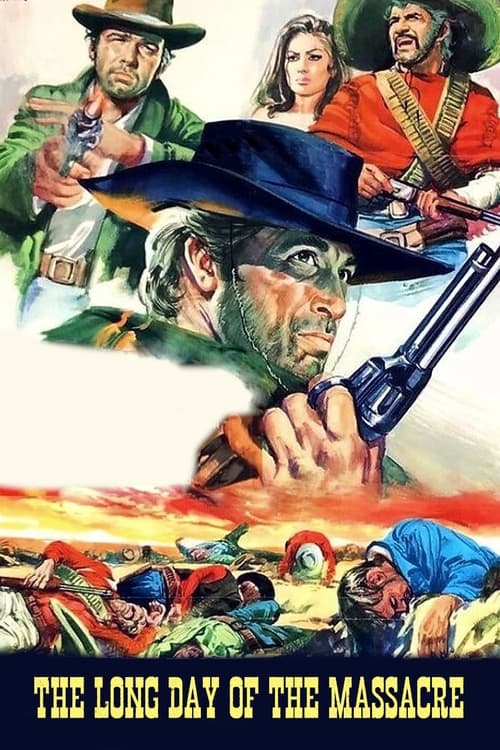
The Long Day of the Massacre
1968
No user ratings available yet
Representation score: 1.6 out of 10
Representation Score
Fair
1966
Director
Alberto Cardone
Runtime
104 minutes
Average Rating
No ratings yetNew Showbiz Analysis
Alberto Cardone’s film is a striking subversion of the Spaghetti Western genre. While it relies on traditional gender hierarchies and lacks LGBTQ+ representation, it replaces the standard American frontier with a colonial African landscape. This shift allows for a sophisticated critique of imperialist structures. The film excels by centering African characters as active agents in a struggle for liberation. However, it remains tied to 1960s genre conventions regarding gender and disability. Female characters act as catalysts for male action, and disability is used largely as narrative shorthand for a loyal sidekick.
Category Breakdown
The film focuses on traditional conflicts between brothers and does not depict non-straight identities or challenge the assumption that everyone is straight.
Male characters drive the story through physical confrontations and pursuing their own goals. Manuela motivates the main character but does not have much independence.
The film breaks Western stereotypes by using a colonial African setting. African characters and resistance fighters are the main drivers of the plot.
The narrative critiques Western institutions by portraying colonial administration as an antagonistic force within an anti-colonial framework.
A mute companion with a communication disability serves as a loyal sidekick rather than a fully developed character.
Present on Screen
Limited or Absent
Official Synopsis
Johnny Liston has just been released from prison where he has wrongly served twelve years for a murder. He returns to Campos, the village of his birth, where the whole town is terrorized by Johnny's brother, Sartana, who has taken Manuela, Johnny's fiancèe to be his lover. With his only friend a mute, Johnny must seize all opportunity to find out why he was framed, who was involved and why he is not welcome. source: SWDB www.spaghetti-western.net
1968
1972
1965
1967
1968
1956
1967
1971
No reviews yet. Be the first to share your thoughts on this movie!
Use the rating form above to leave a star rating and optional review.