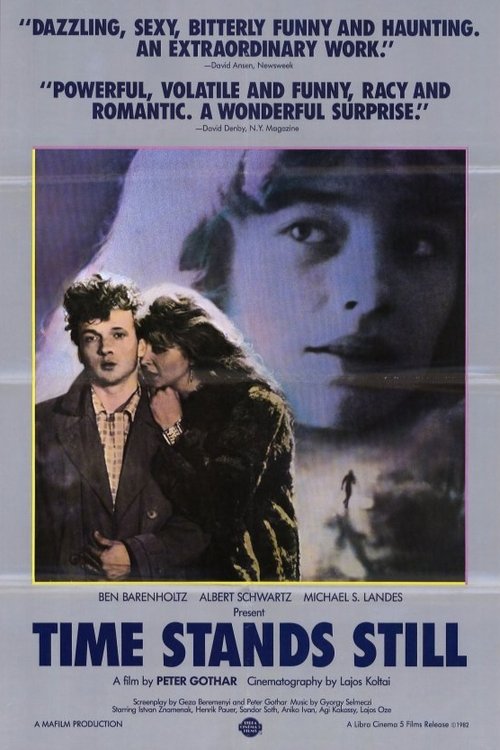
Time Stands Still
1982
No user ratings available yet
Diversity score: 3.9 out of 10
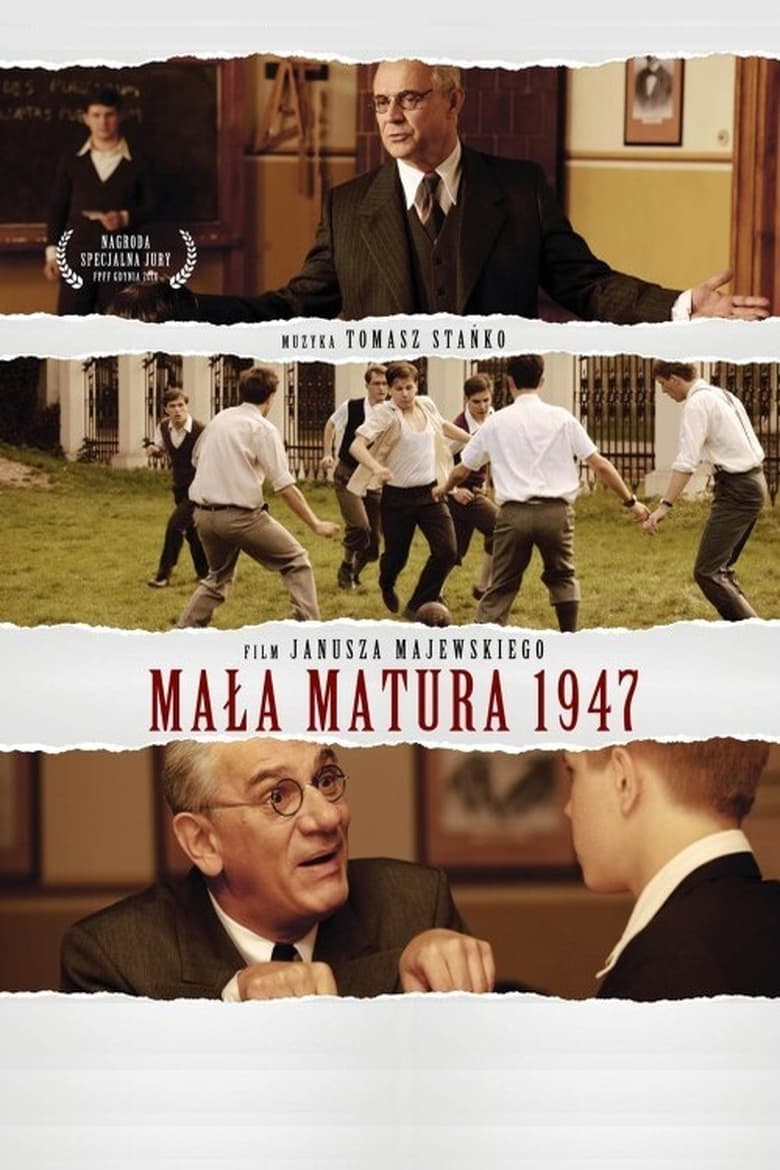
2010
Director
Janusz Majewski
Runtime
109 minutes
Average Rating
No ratings yetSynopsis
A couple with two small children (Ludwik is fourteen and Hania is nine) travel from Lwow to a newly liberated Krakow. Ludwik attends a good school and quickly establish friendships. Before the 1946 June "3XTAK” referendum Stanislaw Mikolajczyk, leader of the PSL party, the Deputy Prime Minister and Minister for Agriculture, came to Krakow. During his visit Ludwig was involved in a street brawl and consequently, was arrested. In turbulent times in which Ludwik matures, things trivial and silly still verge on the serious and the tragic...
Overall Score
Fair
Category Breakdown
LGBTQ+ Representation
The film explores adolescent sexuality and first loves. However, there is no explicit evidence of queer identities or non-heteronormative subtext.
Gender Representation
The story centers on male coming-of-age tropes and masculine archetypes. It prioritizes the protagonist's rebellion and his idolization of male figures.
Racial & Ethnic Diversity
Set in 1947 Krakow, the cast is depicted as ethnically homogeneous. The film functions as a localized historical study of the period.
Religious & Cultural Diversity
The narrative critiques established power structures through rebellion against unjust authorities. It explores complex relationships with nationalistic symbols like the Warsaw Uprising.
Disability Representation
There are no visible or mentioned depictions of physical or neurodivergent disabilities in the narrative.
Strengths
Areas for Improvement
AI Analysis
The film is a period-specific drama focused on the psychological development of a single protagonist in post-WWII Poland. It prioritizes historical authenticity and the friction between individual desire and systemic oppression over modern intersectional frameworks. While the story offers a nuanced look at social volatility and the struggle against authority, the demographic scope is narrow. The narrative is deeply rooted in a specific, homogeneous historical moment that lacks diverse identity representation. Ultimately, the film functions as a localized study of adolescence and national identity rather than a platform for varied demographic perspectives.
1982

2005
1986
1960

2003

1976

1989
1954

2006

1994
2000
2020
No reviews yet. Be the first to share your thoughts on this movie!
Use the rating form above to leave a star rating and optional review.