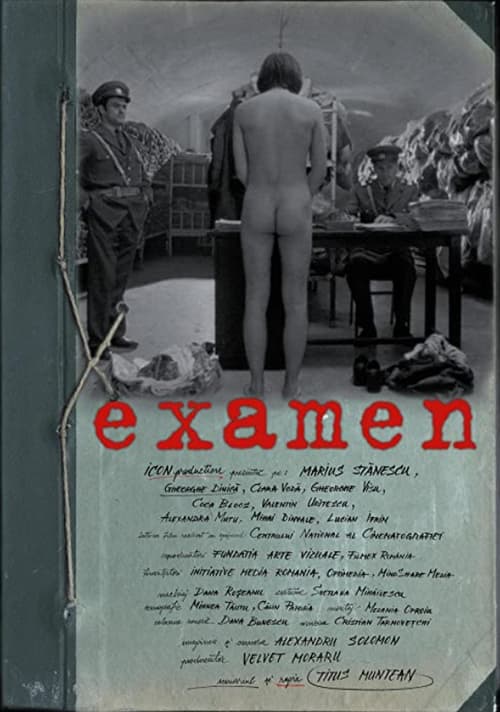
Exam
2003
No user ratings available yet
Representation score: 3.5 out of 10

Representation Score
Fair
2006
Not RatedDirector
Cătălin Mitulescu
Runtime
106 minutes
Average Rating
No ratings yetNew Showbiz Analysis
The film excels in its intricate narrative structure and its critique of institutional power. By centering on the individual's fight against an oppressive state, it addresses progressive themes of systemic resistance. However, the film lacks demographic diversity. Its representation is confined to traditional romantic and ethnic contexts, offering limited exploration of LGBTQ+ identities or diverse racial backgrounds. Ultimately, the film is a focused study of Romanian history and politics, prioritizing historical authenticity over broader demographic inclusivity.
Category Breakdown
The story focuses on a romantic relationship between Eva and her boyfriend during adolescence. It delves into teenage intimacy and autonomy but does not include narratives that challenge traditional assumptions about gender and sexuality.
Eva is the main character who actively shapes the plot rather than being a passive participant. Her decisions about her expulsion and her choice to leave the country challenge traditional stereotypes of female characters.
The cast is made up of Romanian actors, providing a historically accurate depiction of 1989 Bucharest. This focus on a specific national identity limits the representation of contemporary global diversity.
The film sharply criticizes totalitarian institutions. It highlights youthful defiance and the rejection of state-imposed social orders as crucial for reclaiming personal identity.
There are no prominent depictions of visible or invisible disabilities. The narrative does not feature characters with neurodivergent or physical disabilities.
Present on Screen
Limited or Absent
Official Synopsis
Bucharest 1989 - the last year of Ceausecu's dictatorship. Eva lives with her parents and her 7 year old brother, Lalalilu. One day at school, Eva and her boyfriend accidentally break a bust of Ceausescu. They are forced to confess their crime before a disciplinary committee and Eva is expelled from school and transferred to a reformatory establishment. There she meets Andrei, and decides to escape Romania with him. Lalalilu becomes convinced that Ceausescu is the main reason for Eva's decision to leave. So with his friends from school he devises a plan to kill the dictator.
2003
1985
1993
2004

1995
1993

2014
2010
No reviews yet. Be the first to share your thoughts on this movie!
Use the rating form above to leave a star rating and optional review.