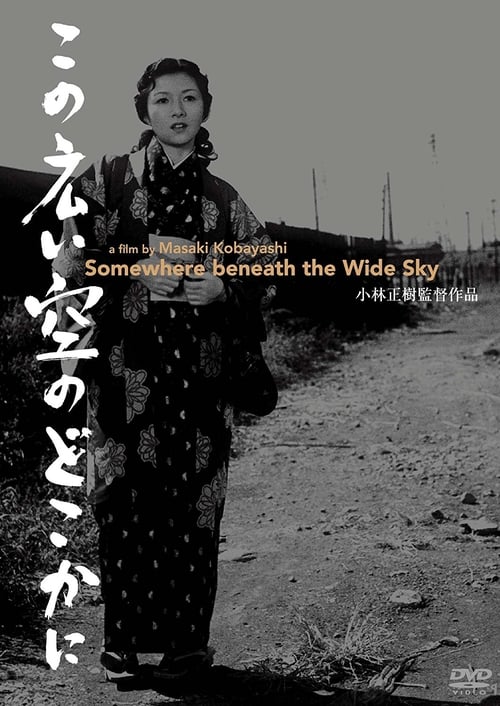
Somewhere Beneath the Wide Sky
1954
No user ratings available yet
Diversity score: 5.3 out of 10

1986
Director
Kinji Fukasaku
Runtime
133 minutes
Average Rating
No ratings yetSynopsis
In the 50s, the complicated life of a popular writer who must share his life with his family, his numerous mistresses and his work
Overall Score
Fair
Category Breakdown
LGBTQ+ Representation
The film explores non-monogamous dynamics through a writer's numerous mistresses. While it disrupts the nuclear family model, it lacks explicit confirmation of queer identities or non-cisnormative expressions.
Gender Representation
The narrative subverts the trope of the stable, competent husband. By centering on a man's friction with multiple women, it challenges traditional patriarchal and harmonious household hierarchies.
Racial & Ethnic Diversity
Set in 1950s Japan, the cast is likely ethnically homogeneous. However, the film offers a specific cultural lens that avoids Western-centric narrative norms.
Religious & Cultural Diversity
The film critiques the idealized family unit through a lens of moral relativism. It frames traditional domestic institutions as sites of conflict rather than virtue.
Disability Representation
There is no evidence of characters with physical or neurodivergent disabilities within the provided narrative details.
Strengths
Areas for Improvement
AI Analysis
House on Fire functions as a deconstruction of traditional domesticity. By focusing on a writer caught between family and various mistresses, the film prioritizes individual desire and social friction over conventional family values. The film's strength lies in its ability to challenge the stability of the nuclear family. It moves away from idealized moral codes to explore the messy, subjective realities of post-war Japanese social structures. However, the film remains limited by its lack of explicit LGBTQ+ specificity and its ethnically homogeneous setting. It offers a complex look at interpersonal dynamics without necessarily expanding into broader identity representation.
1954

1966

1964
1948

1960
1959

1997
1997
1972
1951
1960

1980
No reviews yet. Be the first to share your thoughts on this movie!
Use the rating form above to leave a star rating and optional review.