
The Twelve Chairs
1933
No user ratings available yet
Diversity score: 3.8 out of 10
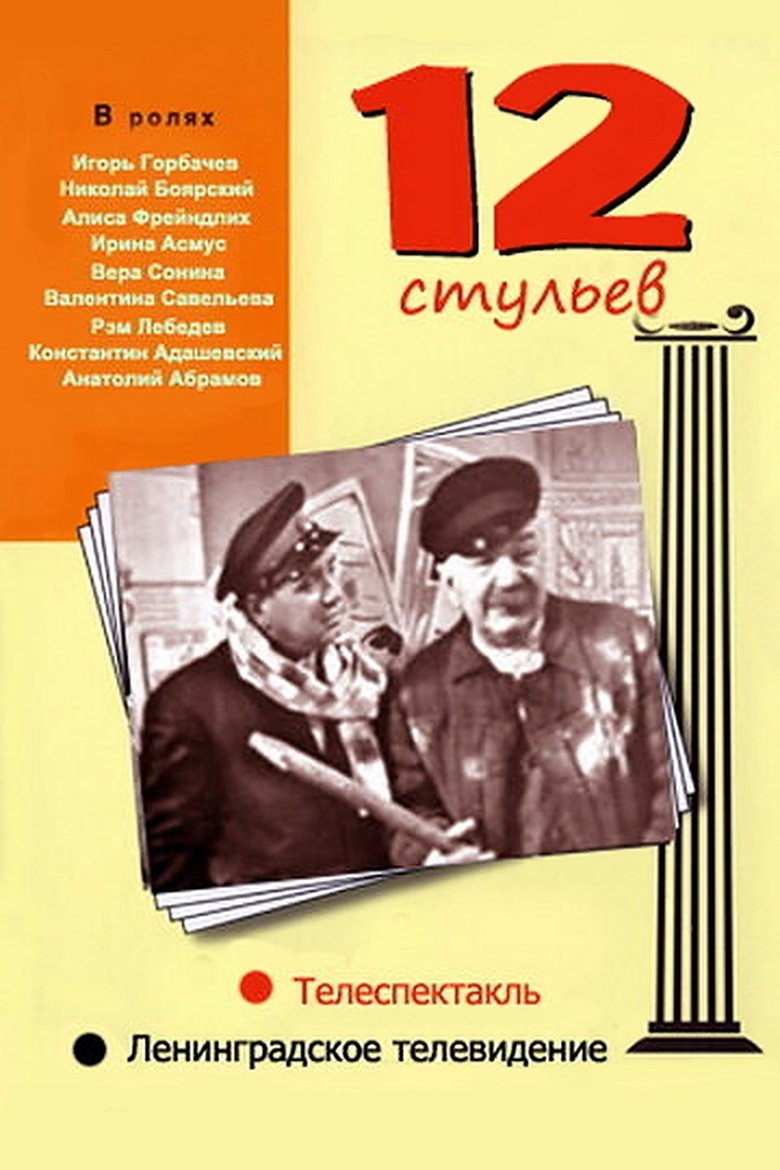
1966
Director
Aleksandr Belinsky
Average Rating
No ratings yetSynopsis
Who was the first to bring the great novel "12 Chairs" to the screen? You say "Leonid Gaidai" - and it will be a mistake. In our country, the first director was Alexander Belinsky (Leningrad television, 1966). Filming the favorite books of millions is a difficult task. The audience knows the plot in detail. Winged phrases have long gone to the people. Everyone has their own idea of the main characters. In general, dissatisfied will be sure. So the version of "12 chairs", proposed by Alexander Belinsky, of course, will not suit everyone.
Overall Score
Fair
Category Breakdown
LGBTQ+ Representation
The film lacks any evidence of non-cisnormative gender identities or same-sex intimacy. The narrative appears to adhere to the social constraints of 1966 Soviet television.
Gender Representation
The story likely centers on male protagonists navigating social hierarchies. There is no indication of women driving the plot or subverting traditional gender roles.
Racial & Ethnic Diversity
As a Soviet production based on Russian literature, the cast is likely ethnically homogeneous. No race-bent casting or diverse ethnic representation is noted.
Religious & Cultural Diversity
The film offers a strong critique of capitalist structures and bourgeois greed. This satirical approach provides a unique cultural perspective that disrupts Western notions of meritocracy.
Disability Representation
There is no mention of characters with visible or invisible disabilities. No such elements are utilized as plot devices or portrayed with agency.
Strengths
Areas for Improvement
AI Analysis
12 Chairs (1966) serves primarily as a period-specific cultural artifact. It reflects the systemic constraints and ideological priorities of the Soviet era rather than modern intersectional storytelling. The film excels in cultural representation by using satire to critique individualistic accumulation and capitalist obsession. This provides a distinct socio-political framework that differs from Western narrative traditions. However, the work lacks diversity in identity-based categories. It remains largely homogeneous in terms of gender, race, and sexual orientation, consistent with the mid-century production context.
1933

1996
1968
1992

1961
1984
2000
1969

1950
1979
1944
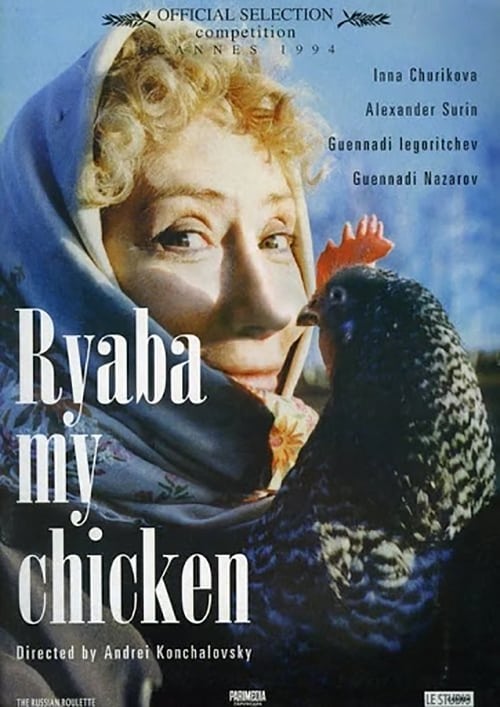
1994
No reviews yet. Be the first to share your thoughts on this movie!
Use the rating form above to leave a star rating and optional review.