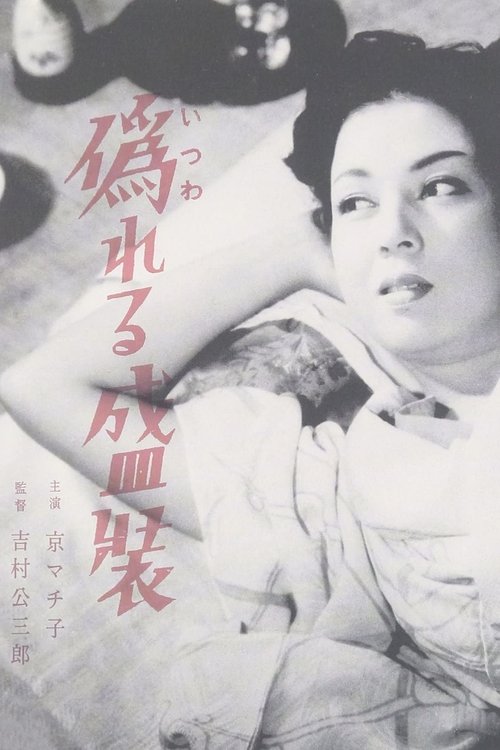
Clothes of Deception
1951
No user ratings available yet
Diversity score: 4.2 out of 10

1947
Director
Kōzaburō Yoshimura
Runtime
89 minutes
Average Rating
No ratings yetSynopsis
After Japan's loss in the war, the wealthy, cultured, liberal Anjo family have to give up their mansion and their way of life. They hold one last ball at the house before leaving. The seemingly cold, cynical son secretly grieves for his defeated father and the values that the war destroyed, while the daughter tries to prevent father from taking his life and to find her own place in the new Japan.
Overall Score
Limited
Category Breakdown
LGBTQ+ Representation
The film explores repressed desires and the tension between public persona and private impulse. However, it lacks explicit depictions of non-heteronormative identities or same-sex intimacy.
Gender Representation
The narrative offers a nuanced critique of restrictive gender roles within the samurai hierarchy. It highlights the friction caused when women navigate domestic propriety, subtly subverting expectations of passive femininity.
Racial & Ethnic Diversity
The cast is ethnically homogeneous, reflecting the specific historical context of post-war Japan. While this avoids whitewashing, the film does not actively engage in diversifying ethnic identities.
Religious & Cultural Diversity
The film excels at critiquing rigid class hierarchies and the decay of the aristocratic class. It deconstructs absolute morality by emphasizing the conflict between duty and personal desire.
Disability Representation
There is no discernible focus on visible or invisible disabilities. Characters with disabilities are not utilized as central figures or tools for character development.
Strengths
Areas for Improvement
AI Analysis
The film functions as a sophisticated character study that uses the decline of an aristocratic family to critique traditional authority. Its strength lies in its thematic deconstruction of social hierarchies and the embrace of moral complexity over rigid codes of honor. However, the work remains limited by its historical setting, resulting in a lack of racial and LGBTQ+ diversity. The narrative focuses on traditional social transgressions rather than specific queer identities, and the cast remains ethnically uniform. Ultimately, while the film provides progressive depth regarding individual agency against stifling institutions, it lacks representation for disability and diverse ethnic backgrounds.
1951
1972

1941
1948
1966
1988
1962

1986

2015
1946
1964
1948
No reviews yet. Be the first to share your thoughts on this movie!
Use the rating form above to leave a star rating and optional review.