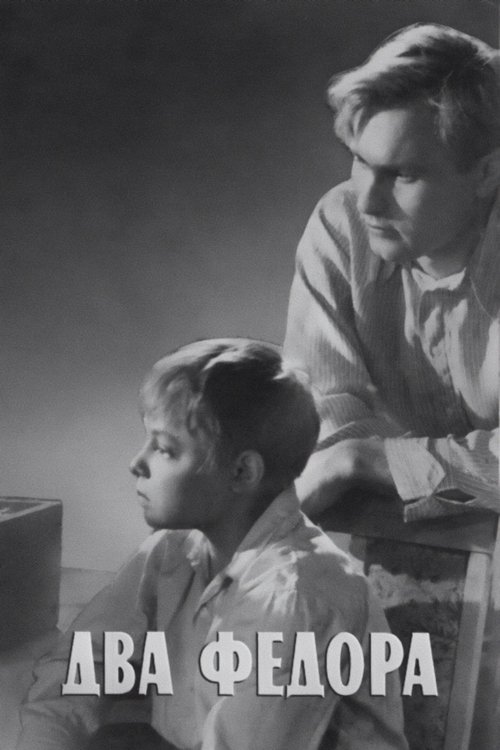
The Two Fedors
1958
No user ratings available yet
Diversity score: 4.9 out of 10

1966
Director
Jan Čuřík, Antonín Máša
Runtime
78 minutes
Average Rating
No ratings yetSynopsis
Michal's father and his friends are stigmatized by their war experience and the post-war social deformations in which they took part either directly, or watched them cowardly and in silence. They are trying to repress their feelings of guilt and justify their behavior to the young generation with memories of their heroic war feats. Michal, however, does not want to have anything to do with their problems. He subconsciously perceives the unpleasant atmosphere in the family as well as his father's hypocrisy. After one of many quarrels with his father, he runs away from home, determined to go his own way.
Overall Score
Fair
Category Breakdown
LGBTQ+ Representation
The film lacks explicit evidence of LGBTQ+ characters or non-cisnormative identities. The narrative focuses primarily on the intergenerational friction between a father and son.
Gender Representation
The story subverts traditional masculine ideals by portraying the father as a hypocritical figure rather than a stable leader. It disrupts patriarchal hierarchies by centering on the failure of the traditional male archetype.
Racial & Ethnic Diversity
The cast appears homogeneous, reflecting its 1966 Czechoslovak origin. There is no evidence of intentional ethnic blending or multicultural casting within this localized study of social guilt.
Religious & Cultural Diversity
The film critiques established institutions and the sanctity of the traditional family unit. It favors individualistic truth over state-sanctioned or traditionalist histories and heroic narratives.
Disability Representation
There is no specific evidence of characters with visible or invisible disabilities serving as central plot drivers. The focus remains on psychological guilt and social deformation.
Strengths
Areas for Improvement
AI Analysis
Searching (1966) is a psychological drama that prioritizes moral complexity over demographic variety. It functions as a localized study of post-war social deformation, focusing on the breakdown of authority within the family unit. The film's progressive value lies in its deconstruction of the 'heroic' masculine archetype. By exposing the hypocrisy of the older generation, it challenges traditional social hierarchies and the stability of the domestic sphere. However, the film lacks breadth in terms of identity-based representation. It remains a culturally specific work with a homogeneous cast, offering little in the way of racial or LGBTQ+ diversity.
1958
1982
1962
1947
1982
1972
1973

1991
2001
1988
1969
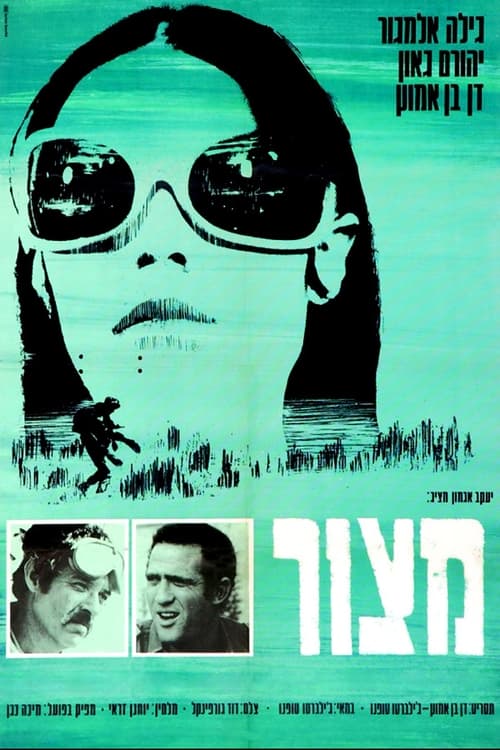
1969
No reviews yet. Be the first to share your thoughts on this movie!
Use the rating form above to leave a star rating and optional review.