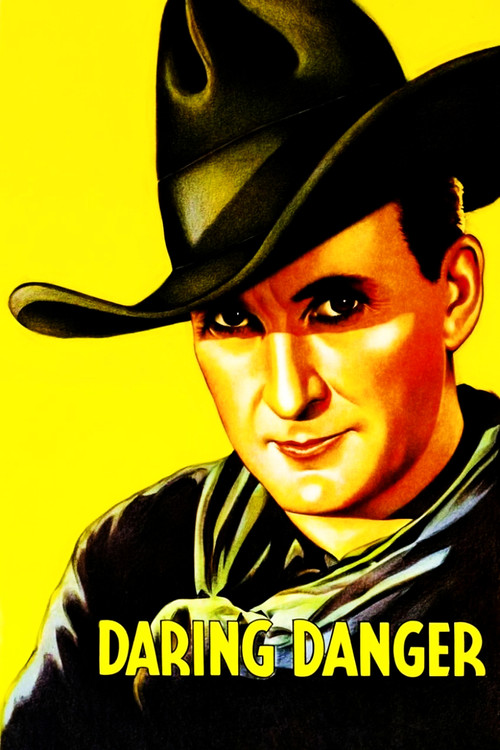
Daring Danger
1932
No user ratings available yet
Diversity score: 1.4 out of 10

1935
ApprovedDirector
D. Ross Lederman
Runtime
63 minutes
Average Rating
No ratings yetSynopsis
A singing medicine-show cowboy and his magician partner catch a killer.
Overall Score
Limited
Category Breakdown
LGBTQ+ Representation
The film lacks any evidence of LGBTQ+ characters or non-heteronormative identities. It follows standard masculine-coded adventure tropes typical of the 1930s.
Gender Representation
The narrative prioritizes male agency through the singing cowboy archetype. Female characters are likely relegated to passive or domestic roles within this traditional genre structure.
Racial & Ethnic Diversity
The film reflects the homogeneous casting norms of early Hollywood. It likely adheres to conventional, stereotypical depictions of the American frontier common to the era.
Religious & Cultural Diversity
The story operates within traditional Western mythology, reinforcing frontier justice and individualist heroism. It offers a conventional view of social order without institutional critique.
Disability Representation
There is no evidence regarding the inclusion or depiction of characters with physical or neurodivergent disabilities.
Strengths
Areas for Improvement
AI Analysis
Moonlight on the Prairie is a standard B-movie Western that functions as a product of its time. It relies on established genre formulas, such as the singing cowboy and magician duo, to drive a straightforward adventure narrative. The film reinforces traditional social hierarchies rather than challenging them. By adhering to the masculine-coded tropes of the 1930s, it maintains a narrow focus on conventional heroism and heteronormative social dynamics. Ultimately, the work lacks the intersectional complexity or intentionality needed to provide nuanced representation. It serves as a typical example of early Hollywood's reliance on homogeneous casting and stabilizing cultural myths.
1932
1931
1933
1940
1932

1934
1936
1953
1936
1934
1950
1940
No reviews yet. Be the first to share your thoughts on this movie!
Use the rating form above to leave a star rating and optional review.