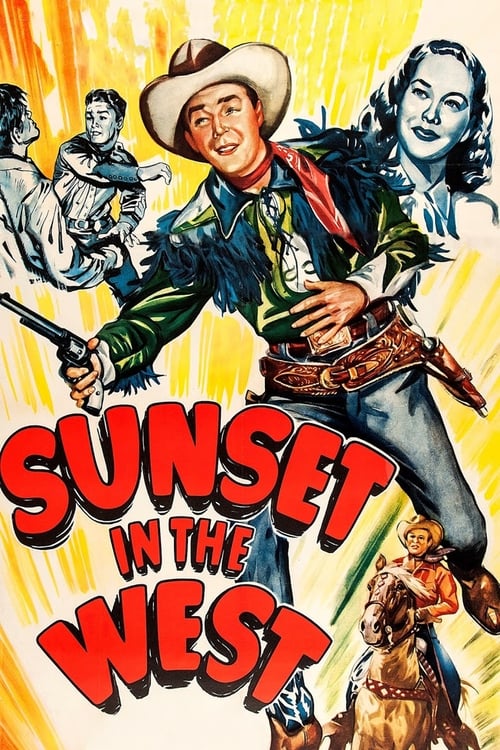
Sunset in the West
1950
No user ratings available yet
Diversity score: 2.3 out of 10

1950
PassedDirector
William Witney
Runtime
67 minutes
Average Rating
No ratings yetSynopsis
Roy is a United States Marshal tracking down a counterfeiting ring and hunting down a mountain lion. Songs: "It's One Wonderful Day," "Rootin' Tootin' Cowboy," "Pancho's Rancho" and the title song.
Overall Score
Minimal
Category Breakdown
LGBTQ+ Representation
The film operates within a strictly heteronormative framework. There is no presence of queer subtext or non-cisnormative identities.
Gender Representation
Agency is concentrated almost exclusively in the male protagonist, Roy. The narrative prioritizes masculine leadership and physical competence over diverse gender roles.
Racial & Ethnic Diversity
Casting follows the homogeneous patterns of the era. The story centers on the traditional Anglo-Saxon Western archetype without non-white majority representation.
Religious & Cultural Diversity
The plot validates established social hierarchies and federal authority. It focuses on enforcing law and order against criminal elements like counterfeiters.
Disability Representation
There is no documented evidence regarding the portrayal of physical or neurodivergent disabilities in this production.
Strengths
Areas for Improvement
AI Analysis
Twilight in the Sierras is a quintessential mid-century Western that reinforces traditional social hierarchies. The film adheres to established genre conventions, focusing on clear moral binaries and the enforcement of federal authority through its protagonist. Rather than subverting systemic structures, the narrative centers on masculine pursuits and the preservation of law and order. The lack of intersectional complexity or diverse casting reflects the standard cinematic approach of 1950. Ultimately, the film functions as a reinforcement of the era's status quo, offering little in the way of cultural or identity-based disruption.
1950
1946
1952
1951
1955
1964
1950
1944
1946
1935
1951
1944
No reviews yet. Be the first to share your thoughts on this movie!
Use the rating form above to leave a star rating and optional review.