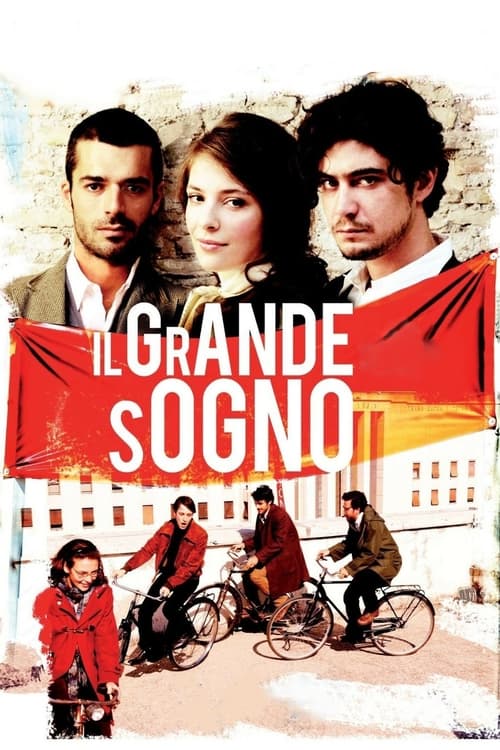
The Big Dream
2009
No user ratings available yet
Representation score: 4.8 out of 10

Representation Score
Fair
2022
Director
Krzysztof Lang
Runtime
117 minutes
Average Rating
No ratings yetNew Showbiz Analysis
March 1968 is a historical drama that uses a romantic lens to explore the fragmentation of social cohesion during the 1968 Polish political crisis. By focusing on lovers separated by political barricades, the film deconstructs the family unit as a site of ideological conflict. The film effectively uses personal intimacy to critique systemic pressures, showing how state authority can fracture human connections and individual autonomy. However, the narrative appears limited by the demographic homogeneity of its period setting, focusing primarily on a heterosexual central pairing and offering little broader characters who reflect more than one aspect of diversity.
Category Breakdown
The film focuses on a heterosexual relationship between Hania and Janek. Although no non-traditional gender identities are explicitly mentioned, the story explores identities that exist in tension with societal norms.
Hania serves as a central emotional and moral guide within a male-dominated political environment. The story provides a framework for women to challenge rigid, patriarchal structures.
Set in Warsaw, the cast likely reflects the demographic homogeneity of the time. However, the film addresses ethnic identity through its depiction of state-led anti-Semitic campaigns during the March events.
The film critiques traditional institutions by portraying the state as a force that disrupts family stability. It emphasizes subjective morality and the disruption of established social orders.
There is no discernible evidence regarding the portrayal of physical or neurodivergent disabilities in the available narrative overview.
Present on Screen
Limited or Absent
Official Synopsis
Warsaw, 1968. Students protesting against the illegal expulsion of their colleagues from university and in defence of play Dziady, directed by Kazimierz Dejmek and performed at the National Theatre, which has been taken off the bill. Among the protesting young people are also Hania and Janek. Their families are on both sides of the March barricade. Young and madly in love with each other, like in Shakespeare's Romeo and Juliet in a country in revolt, they fight for their affection. Will their love survive? Will they be able to overcome the adversities that fate throws at them?
2009
1999
2009
2018
1992
2008

2013

2015
No reviews yet. Be the first to share your thoughts on this movie!
Use the rating form above to leave a star rating and optional review.