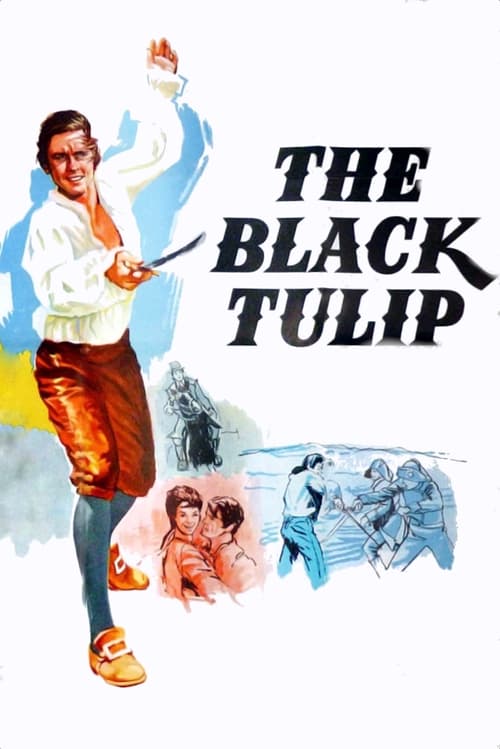
The Black Tulip
1964
No user ratings available yet
Diversity score: 2.8 out of 10

1963
Director
Antonio Isasi-Isasmendi
Runtime
98 minutes
Average Rating
No ratings yetSynopsis
Robert Lafleur (Scaramouche) is an actor in 18th century France who spends most of his time, including when he should be on stage, light-heartedly having love affairs and generally enjoying life. One day, a marquis visits him and asks him questions about the birth mark on his shoulder...
Overall Score
Minimal
Category Breakdown
LGBTQ+ Representation
The film adheres to strict heteronormative structures typical of its 18th-century setting. No non-cisnormative identities or same-sex intimacy are present in the romantic subplots.
Gender Representation
The narrative centers on a masculine hero who drives the plot through physical prowess. While women participate in sophisticated social maneuvering, they primarily serve as catalysts for the protagonist's journey.
Racial & Ethnic Diversity
The production features a homogeneous European cast reflecting the historical French setting. It focuses on class distinctions rather than racial or ethnic intersectionality.
Religious & Cultural Diversity
The story critiques institutional authority through a hero versus corrupt establishment lens. This struggle is framed as a pursuit of individual justice rather than a systemic critique.
Disability Representation
There are no depictions of physical or neurodivergent disabilities. Characters are presented through the lens of idealized physical capability common to the swashbuckler genre.
Strengths
Areas for Improvement
AI Analysis
The film is a conventional period swashbuckler that prioritizes traditional storytelling hierarchies. It relies on established genre tropes, focusing on a singular masculine hero and a homogeneous European cast. While the film offers a critique of corrupt authority and tyrannical regimes, this remains contained within a standard heroic framework. It lacks representation of LGBTQ+ identities, diverse ethnicities, or disabilities. Ultimately, the production reflects the cinematic standards of its era, emphasizing historical realism and class-based conflict over the subversion of social or identity-based norms.
1964
1943
1961

1949

1952
1938
1953

1947
1964
1953
1967
1970
No reviews yet. Be the first to share your thoughts on this movie!
Use the rating form above to leave a star rating and optional review.