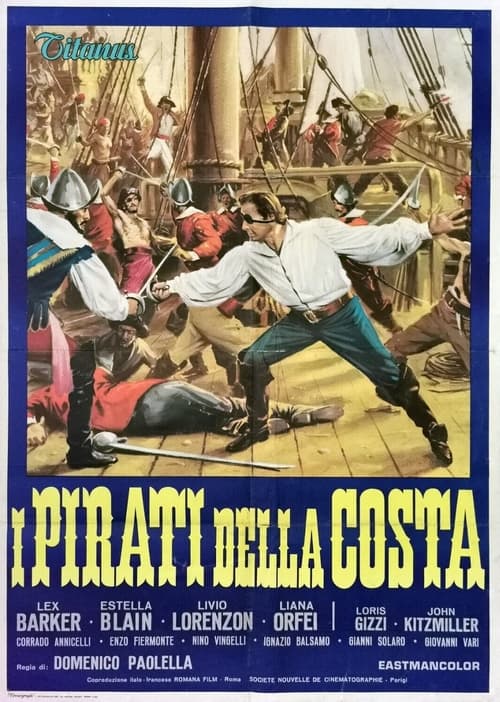
Pirates of the Coast
1960
No user ratings available yet
Diversity score: 2.3 out of 10
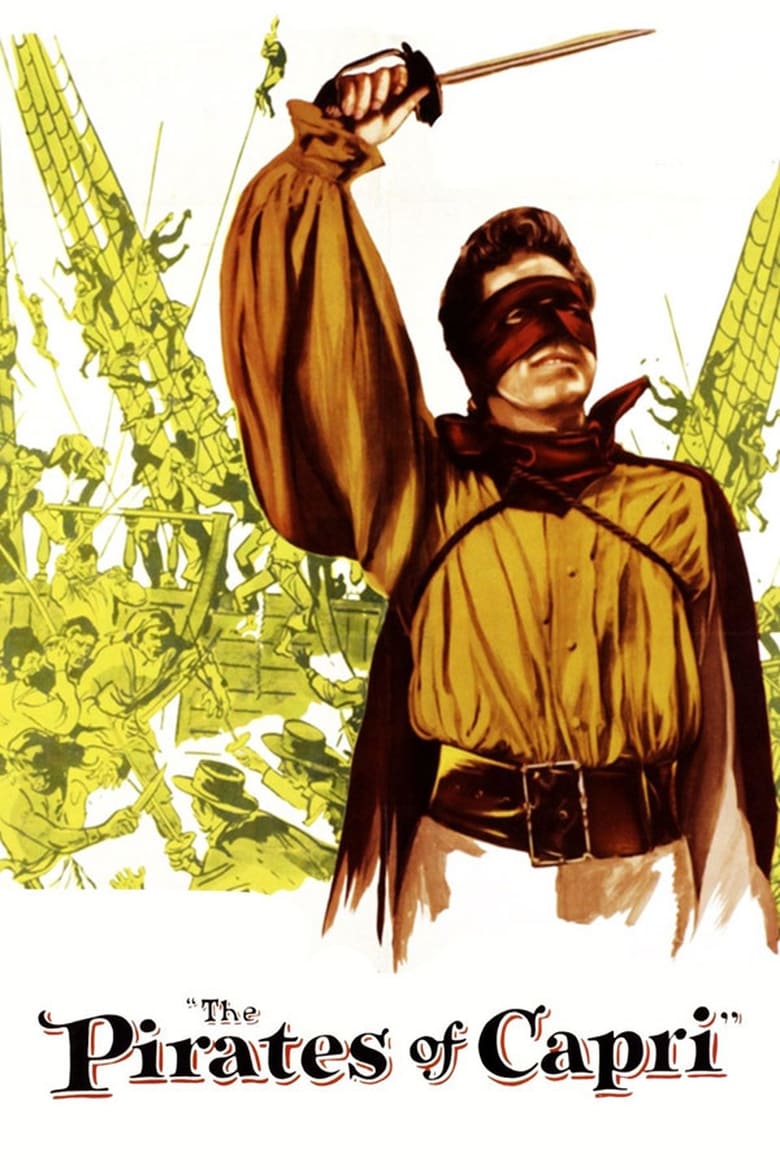
1949
ApprovedDirector
Edgar G. Ulmer, Giuseppe Maria Scotese
Runtime
94 minutes
Average Rating
No ratings yetSynopsis
A group of men calling themselves 'The Pirates of Capri", headed by Captain Sirroco, who is really Count Amalfi, are trying to restore freedom to the people of Naples. The Queen is advised of the pirate's assault of a member of her court and she seeks to escape to Palermo. But, she is advised it would be good politics for her to attend a ball Amalfi is giving for his fiancée, Mercedes, who is unaware of the dual role Amalfi is playing.
Overall Score
Limited
Category Breakdown
LGBTQ+ Representation
The film lacks any evidence of non-heteronormative identities. The story centers on a conventional heterosexual romance between Amalfi and Mercedes.
Gender Representation
Agency is concentrated in male characters like Amalfi. While the Queen holds political status, female roles like Mercedes primarily serve the protagonist's narrative arc.
Racial & Ethnic Diversity
The setting focuses on Southern European identities within a Mediterranean context. Representation appears limited to standard European casting and class-based distinctions.
Religious & Cultural Diversity
The plot explores political tension between authority and revolutionaries. However, it reinforces traditional class hierarchies through aristocratic social rituals and formal balls.
Disability Representation
There is no information available regarding the portrayal of physical or neurodivergent disabilities in this production.
Strengths
Areas for Improvement
AI Analysis
The Pirates of Capri is a period adventure that adheres closely to mid-century cinematic tropes. It prioritizes a classical narrative of heroism and romantic entanglement over subversive or intersectional themes. While the protagonist's dual identity adds complexity, it reinforces a traditional masculine archetype of the secret liberator. The film operates within established social hierarchies rather than challenging them. Ultimately, the production reflects the era's standard storytelling, focusing on class struggles and aristocratic maneuvering rather than diverse or non-traditional representation.
1960
1966
1954
1960
1953
1966

1952
1955
1961
1941

1951
1954
No reviews yet. Be the first to share your thoughts on this movie!
Use the rating form above to leave a star rating and optional review.