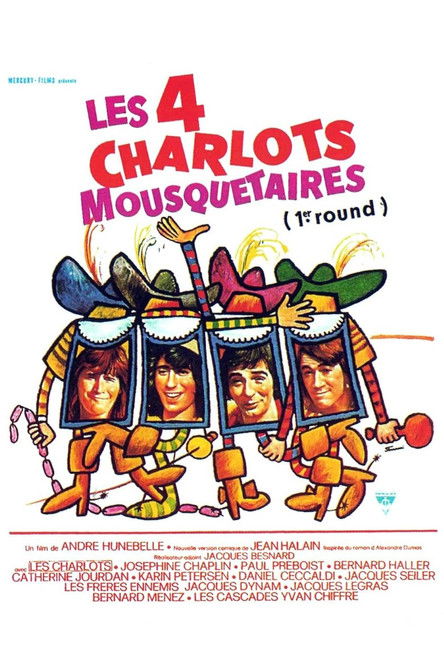
The Four Charlots Musketeers
1974
No user ratings available yet
Diversity score: 2.4 out of 10
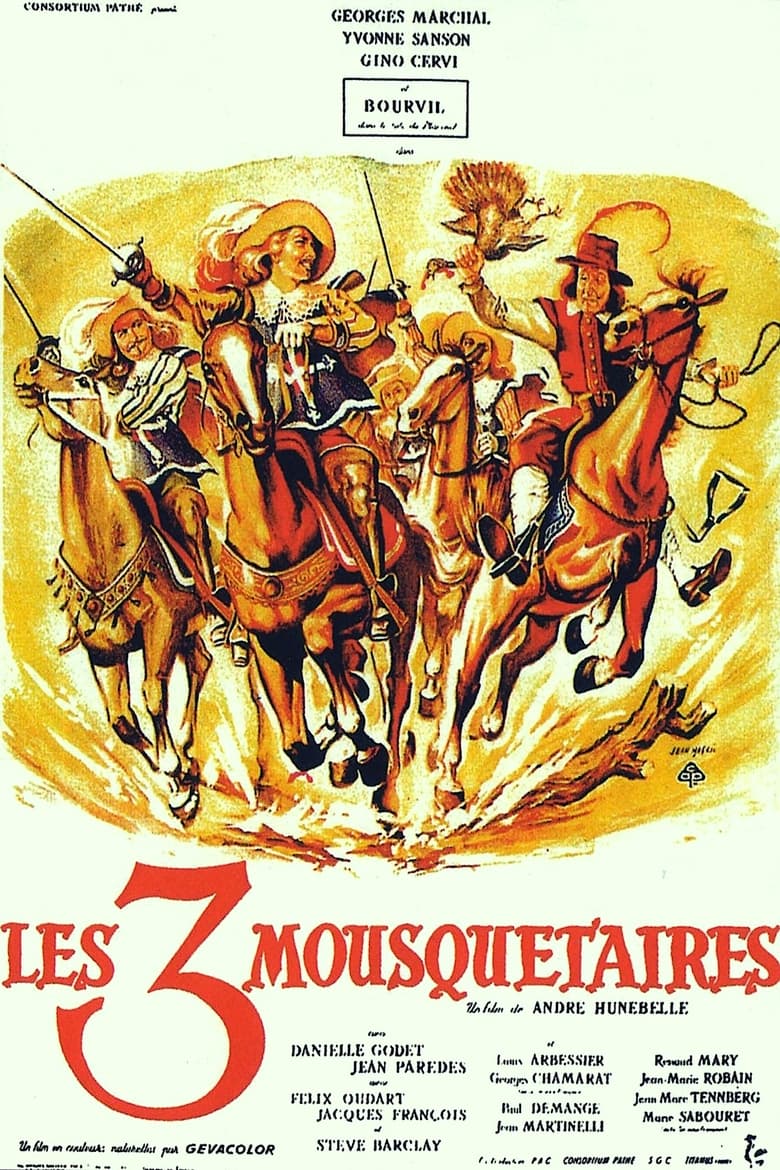
1953
Director
André Hunebelle
Runtime
116 minutes
Average Rating
No ratings yetSynopsis
The umpteenth adaptation of Dumas' novel finds d'Artagnan and his friends promoting the love affairs of Anne of Austria and the Duke of Buckingham, incurring the wrath of the Cardinal and exposing themselves to the cold cruelty of Milady de Winter. Also featured are the tender Mme Bonacieux, the hilarious Planchet, the Queen's ferrets and Bethune's executioner, against a backdrop of clanging swords.
Overall Score
Minimal
Category Breakdown
LGBTQ+ Representation
The film operates strictly within heteronormative romantic intrigues. There are no depictions of non-cisnormative identities or same-sex intimacy.
Gender Representation
Men serve as the primary drivers of the plot through physical strength and political agency. Female characters possess agency primarily through romantic leverage or moral opposition.
Racial & Ethnic Diversity
The cast is predominantly white and European, reflecting the era's demographic constraints. No non-European characters appear in positions of agency.
Religious & Cultural Diversity
The narrative reinforces traditional Western institutions like the Crown and the Church. It treats these structures as essential frameworks for honor and chivalry.
Disability Representation
There is no representation of physical or neurodivergent disabilities. Characters are defined by the idealized physical prowess required by the swashbuckler genre.
Strengths
Areas for Improvement
AI Analysis
André Hunebelle’s adaptation is a quintessential period piece that prioritizes historical atmosphere and traditional adventure tropes. It functions as a mirror to 17th-century French aristocracy, adhering to the social hierarchies of the source material rather than subverting them. The film reinforces classical gender roles and nationalistic loyalty. While women are central to the conflict, the narrative positions men as the active agents of history and political change. Ultimately, the work serves as a traditionalist view of power. It lacks diversity by design, focusing instead on chivalric honor and the established authority of the monarchy.
1974
1974
1961
1964
1961
1947
1993
1963
1952
1950
1953
1962
No reviews yet. Be the first to share your thoughts on this movie!
Use the rating form above to leave a star rating and optional review.