
The Shop on Main Street
1965
No user ratings available yet
Representation score: 4.6 out of 10
Representation Score
Fair
2001
NRDirector
Jiang Wen
Runtime
139 minutes
Average Rating
No ratings yetNew Showbiz Analysis
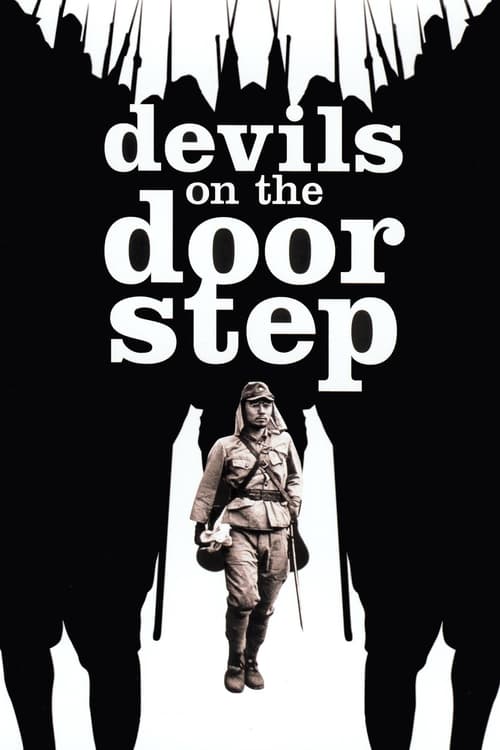
Devils on the Doorstep is a sophisticated historical satire that prioritizes ideological and cultural critique over broad demographic representation. While it lacks representation for LGBTQ+ individuals and people with disabilities, it excels in deconstructing the mechanics of nationalism and institutional authority. The film's strength lies in its ability to use the tension between Chinese peasants and Japanese prisoners to explore the absurdity of xenophobia. However, it remains tied to traditional social hierarchies. Women are largely confined to traditional domestic roles, and the cast remains ethnically homogeneous, focusing on the specific geopolitical friction of the occupation.
Category Breakdown
The film focuses entirely on the survival and political paranoia of a rural Chinese village. There are no LGBTQ+ characters or explorations of non-straight relationships.
Women in the film are confined to traditional domestic roles shaped by the era's socioeconomic conditions. The narrative emphasizes interactions between male prisoners and male village leaders, reinforcing traditional gender power structures.
The film explores ethnic tensions through the lens of the Japanese occupation. It highlights the friction between Japanese prisoners and Chinese peasants to illustrate the process of 'othering.'
The narrative offers a critical look at traditional institutions and ideological fervor. It employs dark satire to reveal the corruption inherent in rigid, authoritarian structures and systemic pressures.
The film does not significantly address physical or neurodivergent disabilities. Characters are defined by their political affiliations and social status rather than physical or mental impairments.
Present on Screen
Limited or Absent
Official Synopsis
During the Japanese occupation of China, two prisoners are dumped in a peasant's home in a small town. The owner is bullied into keeping the prisoners until the next New Year, at which time they will be collected. The village leaders convene to interrogate the prisoners. The townspeople then struggle to accommodate the prisoners. One is a bellicose Japanese nationalist, the other a nervous translator. Will the townspeople manage to keep the prisoners until the New Year?
1965
1956
1994

1996

1959

1956

2009
1964
No reviews yet. Be the first to share your thoughts on this movie!
Use the rating form above to leave a star rating and optional review.