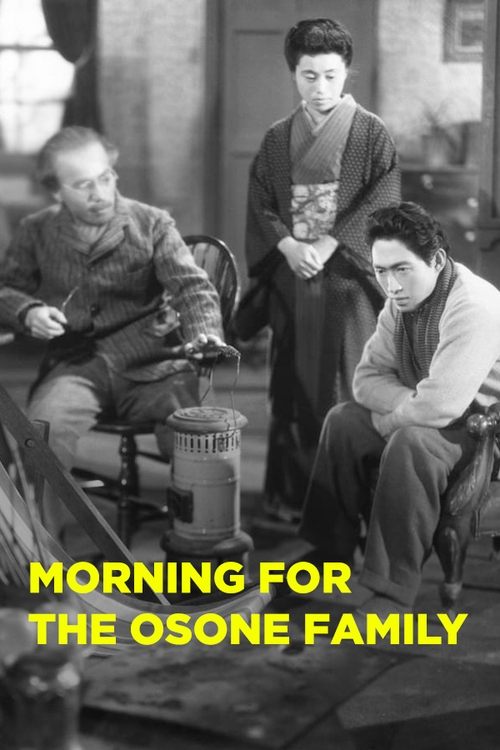
Morning for the Osone Family
1946
No user ratings available yet
Representation score: 4.6 out of 10

Representation Score
Fair
1957
Director
Miyoji Ieki
Runtime
110 minutes
Average Rating
No ratings yetNew Showbiz Analysis
Stepbrothers offers a critical look at the rigid hierarchies of Imperial Japan by focusing on a dysfunctional military family. By portraying the domestic sphere as a reflection of systemic violence, the film challenges traditional authority and nationalism. However, the film's focus is heavily centered on masculine power dynamics, limiting the scope of gender-based representation. While it avoids Western-centric clichés and maintains historical and cultural specificity, it does not explore queer identities or diverse gender roles explicitly.
Category Breakdown
The film does not explicitly address non-straight relationships or same-sex intimacy. Instead, it focuses on the conflicts within a patriarchal family structure.
The movie emphasizes male-dominated violence and a masculine military framework. It critiques the nature of patriarchy without offering much space for feminine influence or ability to act.
Set in Imperial Japan, the film highlights a specific national identity. It avoids Western-centric clichés while staying true to its historical context.
The film uses a feudal household to criticize the oppressive Japanese imperial system. It portrays traditional authority and nationalism as inherently corrupt.
There is no information regarding the portrayal of physical or neurodivergent disabilities.
Present on Screen
Limited or Absent
Official Synopsis
In a military family, an illegitimate son is brutalized by his brothers. A patriarchal, feudalistic household where dissent is forbidden is used to reveal the whole imperialist system that afflicted Japan between 1921 and 1946.
1946
1952
1953

1956
1971
1959
1960
2000
No reviews yet. Be the first to share your thoughts on this movie!
Use the rating form above to leave a star rating and optional review.