Assassination
1964
No user ratings available yet
Representation score: 2.4 out of 10
Representation Score
Fair
1981
Director
Shōhei Imamura
Runtime
151 minutes
Average Rating
No ratings yetNew Showbiz Analysis
Shōhei Imamura’s work succeeds by shifting the historical focus from political leaders to the underrepresented classes. By centering the lower classes, the film effectively dismantles the rigid social hierarchies of the Meiji Restoration era. The film’s strength lies in its subversion of gender norms and its focus on instinctual human behavior. It replaces the expected decorum of period dramas with a raw, lively energy that empowers underrepresented voices. However, the film remains limited by its cultural homogeneity and a lack of LGBTQ+ representation. While authentic to its setting, it does not explore the multi-layered identities found in more contemporary global cinema.
Category Breakdown
The film emphasizes primal biological impulses and heterosexual tension. There is no clear indication of queer-coded subtext or non-binary gender identities.
The movie challenges traditional gender roles by highlighting women's active participation and desire. Women are shown as active participants in the lively atmosphere rather than passive subjects.
Set in 1860s Japan, the cast is culturally uniform. While it lacks modern characters who reflect more than one aspect of diversity, it stays true to its historical context by focusing on the Japanese peasantry.
The film critiques institutional structures through the anti-authoritarian 'Ei ja nai ka' philosophy. It prioritizes the underrepresented peasantry over the ruling class to deconstruct historical power dynamics.
There is no significant depiction of physical or neurodivergent disabilities in the narrative.
Present on Screen
Limited or Absent
Official Synopsis
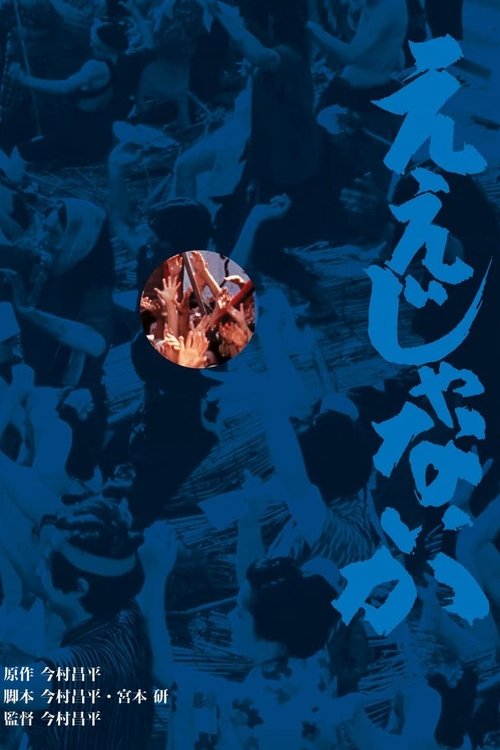
The film depicts carnivalesque atmosphere summed up by the cry "Ei ja nai ka" ("Why not?") in Japan in 1867 and 1868 in the days leading to the Meiji Restoration. It examines the effects of the political and social upheaval of the time, and culminates in a revelrous march on the Tokyo Imperial Palace, which turns into a massacre. Characteristically, Imamura focuses not on the leaders of the country, but on characters in the lower classes and on the fringes of society.
1964

1956
1969
1952
1971
1987
2012
1971
No reviews yet. Be the first to share your thoughts on this movie!
Use the rating form above to leave a star rating and optional review.