
The Smiling Lieutenant
1931
No user ratings available yet
Representation score: 0.4 out of 10
Representation Score
Limited
1924
Director
Ernst Lubitsch
Runtime
76 minutes
Average Rating
No ratings yetNew Showbiz Analysis
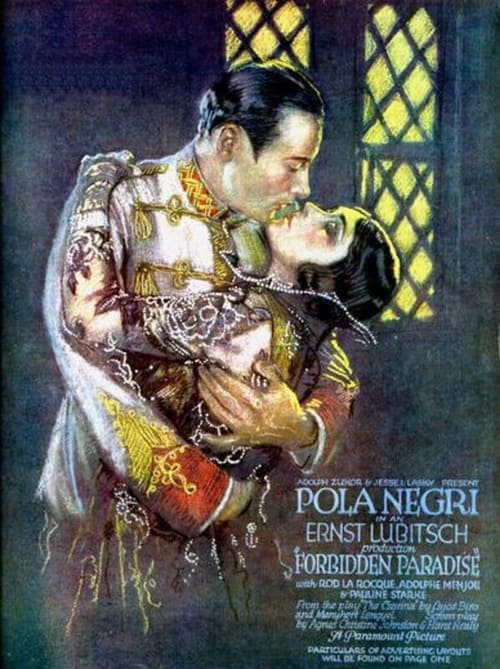
Forbidden Paradise functions as a sophisticated romantic melodrama that prioritizes psychological nuance over modern approaches to diversity. It succeeds in challenging the cliché of the passive female lead, giving the Czarina significant influence in her political and romantic decisions. However, the film is heavily anchored in the era's reliance on Orientalist clichés. The setting serves as a Western-constructed backdrop for romantic clichés rather than an authentic cultural exploration, and the casting reinforces a colonial perspective. Ultimately, while the film critiques established power structures through the lens of individual desire, it remains a product of its time, adhering to traditional romantic structures.
Category Breakdown
The film follows a traditional structure that assumes everyone is straight or cisgender. The plot revolves around a romantic triangle involving a male officer and two women, with no queer undertones.
Female characters play a significant role in driving the narrative through their emotional strength and autonomy. The Czarina demonstrates independence by navigating political crises and making decisive choices about arrest and romance.
The film presents a stylized, Western-constructed version of an exotic locale. It relies on European actors to portray non-Western roles, reinforcing a colonial-era perspective.
The story explores the tension between personal passion and rigid state institutions. It emphasizes individual desire over the strict morality imposed by the monarchy.
There are no visible or invisible disabilities central to the character arcs or the plot progression.
Present on Screen
Limited or Absent
Official Synopsis
Alexei, a young officer, saves the Czarina of a small European kingdom from revolutionary conspirators and is rewarded with her love. Infatuated, he deserts his sweetheart, Anna, the Czarina's lady-in-waiting, only to discover that his Queen is far from true to him. Desperate, he joins the revolutionists and plots against her. The Czarina pleads that she loves only him, and he swears no harm will befall her. Meantime the chancellor nips the revolution in the bud, and the Czarina orders Alexei's arrest. But she causes herself such unhappiness in doing so that she releases him from prison, relinquishes him to Anna, and seeks solace in a new affair with the French Ambassador
1931
1932

1929
1939

1932

1923

1932

1934
No reviews yet. Be the first to share your thoughts on this movie!
Use the rating form above to leave a star rating and optional review.