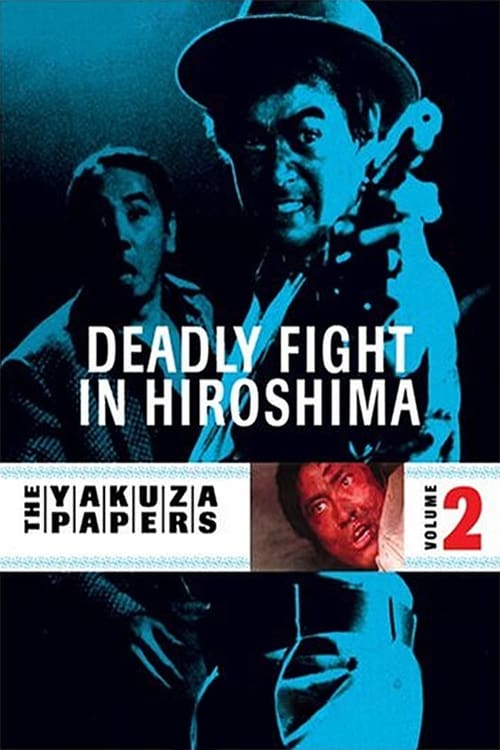
Battles Without Honor and Humanity: Deadly Fight in Hiroshima
1973
No user ratings available yet
Representation score: 5.0 out of 10
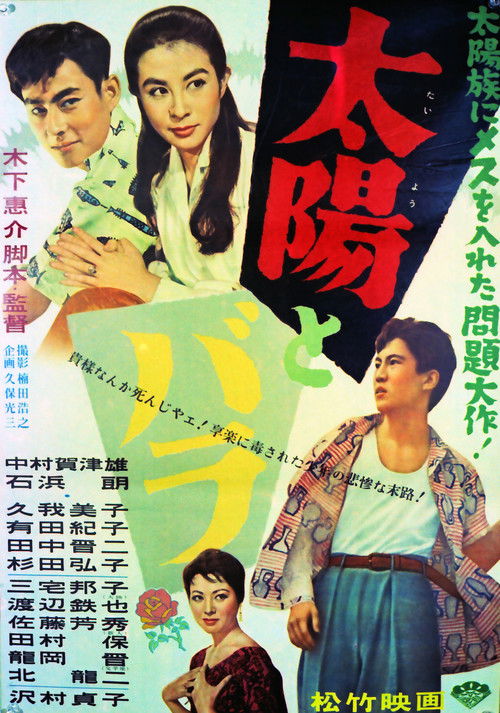
Representation Score
Limited
1956
Director
Keisuke Kinoshita
Runtime
85 minutes
Average Rating
No ratings yetNew Showbiz Analysis
The film functions as a social drama exploring the tension between individual desire and the rigid structures of post-war Japan. It centers on a protagonist who rejects working-class stability to embrace the underworld, offering a deconstruction of traditional family hierarchies. While the film lacks LGBTQ+ or racial diversity, it provides a nuanced look at cultural friction. By prioritizing the protagonist's choice to pursue delinquency over social conformity, the film engages with themes of moral relativism and anti-institutionalism. Ultimately, the work's strength lies in its exploration of class and the subversion of mid-century social expectations, even as it remains centered on a male-driven narrative.
Category Breakdown
The film does not include any representation of LGBTQ+ identities or queer narratives. It focuses solely on the protagonist's relationship with his mother and his involvement in delinquent activities.
A maternal figure serves as a moral anchor, representing traditional stability. However, the main character actively rejects his mother's influence and pursues a life of crime, showcasing his significant role in driving the story.
Set in mid-century Japan, the film depicts a culturally uniform environment. It emphasizes class distinctions and social friction but does not explore multi-layered racial diversity.
The narrative examines anti-institutionalism by showing a character disregarding parental and social authority. This challenges traditional social cohesion through the lens of individualistic, though destructive, actions.
There is no documented evidence regarding the portrayal of physical or neurodivergent characters in this work.
Present on Screen
Limited or Absent
Official Synopsis
Ignoring the protests of his working-class mother, a young man becomes wrapped up in the world of delinquents and yakuza.
1973

1964
1974
1973
1971
1974
1973
2018
No reviews yet. Be the first to share your thoughts on this movie!
Use the rating form above to leave a star rating and optional review.