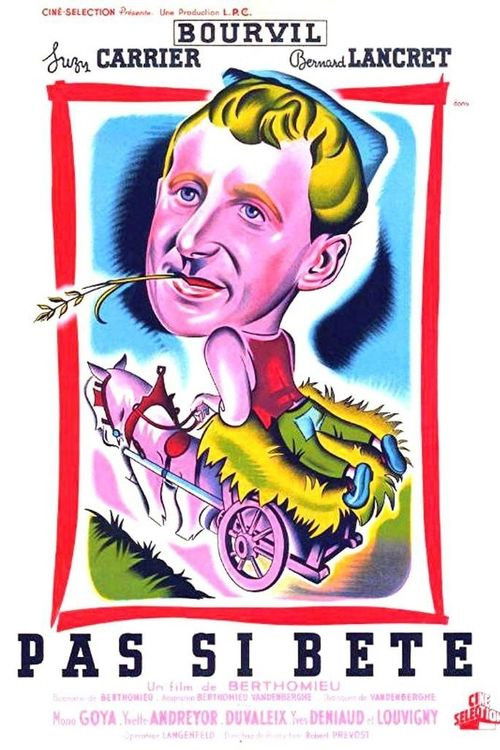
Not So Stupid
1947
No user ratings available yet
Diversity score: 2.8 out of 10

1949
Director
André Berthomieu
Runtime
95 minutes
Average Rating
No ratings yetSynopsis
Léon Ménard, the village verger, is a decent young man whose hobby is to play the accordion. One day he is fired for having accompanied Mary Pinson, a singer deemed scandalous by the right-minded parishioners. Blinded by his love for Mary, Léon follows her to Paris where he becomes her plaything. With Mary's complicity, a gang of swindlers make him the puppet proprietor of a night club. But Léon can't live in a fool's paradise forever and soon finds himself on the street, forsaken and desperate. Luckily, the manager of a circus notices him while he is busking and he hires Léon at once. Not only will success come to him but he will win the love of sweet Solange.
Overall Score
Limited
Category Breakdown
LGBTQ+ Representation
The film lacks LGBTQ+ characters or non-cisnormative identities. The romantic focus remains strictly on traditional heterosexual dynamics between Léon and the female leads.
Gender Representation
The story centers on a male protagonist's journey from disgrace to redemption. Female characters serve as catalysts or romantic interests rather than independent agents of subversion.
Racial & Ethnic Diversity
The narrative depicts a homogeneous social environment typical of 1949 French cinema. There is no evidence of racial or ethnic diversity within the village or Parisian settings.
Religious & Cultural Diversity
The plot reinforces traditional community values and social hierarchies. Moral arbiters in the village dictate social standing, upholding conventional mid-century moral frameworks.
Disability Representation
No characters are identified as having physical or neurodivergent disabilities. The synopsis provides no indication of disability representation.
Strengths
Areas for Improvement
AI Analysis
This mid-century comedy functions as a conventional escapist narrative that adheres to the social and moral expectations of its era. It relies on established archetypes to drive a story of personal redemption and romantic stability. The film reinforces existing social hierarchies rather than challenging them. By centering the plot on a male protagonist's struggle and his eventual success, the narrative maintains a traditional perspective on gender and community standards. Ultimately, the work lacks intersectional depth. It presents a homogeneous view of French society, focusing on moral conformity and traditional romantic arcs without introducing diverse identities or systemic critiques.
1947
1938
1934

1929
1937

1949
1919
1950
1953
1936

1957
1932
No reviews yet. Be the first to share your thoughts on this movie!
Use the rating form above to leave a star rating and optional review.