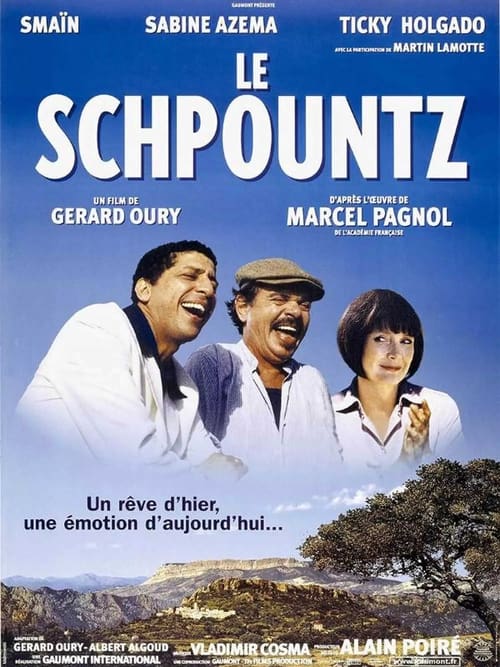
Le Schpountz
1999
No user ratings available yet
Representation score: 1.8 out of 10
Representation Score
Minimal
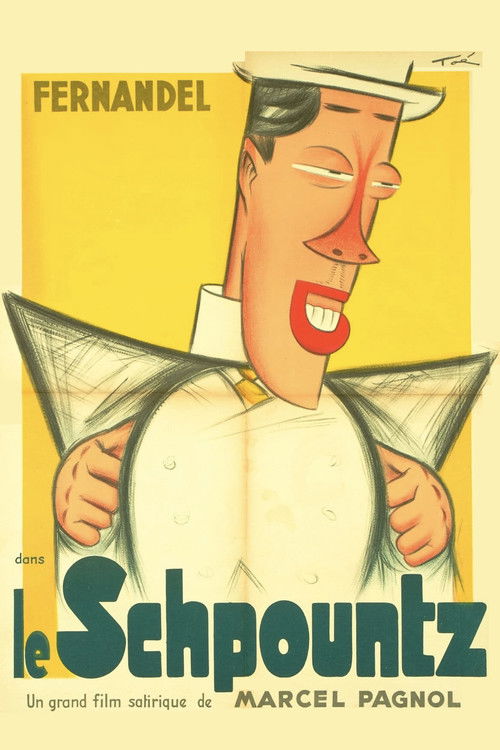
1938
PassedDirector
Marcel Pagnol
Runtime
132 minutes
Average Rating
No ratings yetNew Showbiz Analysis
Marcel Pagnol’s comedy is a character-driven study of 1930s Marseille, focusing on local social dynamics. It satirizes vanity and social pretense within a traditional framework. The film’s structure adheres to the social hierarchies of its time, avoiding characters who reflect more than one aspect of diversity.
Category Breakdown
The film follows the social norms of the pre-war era and does not include any non-binary gender identities or same-sex relationships.
Gender roles follow traditional structures where the male lead has significant influence over the plot. Female characters mainly act as catalysts for romance rather than driving the story themselves.
The cast is ethnically uniform, reflecting the Mediterranean setting of 1938. The story does not explore racial diversity or multi-layered themes.
The story focuses on social status and community standing within a traditional Western framework. It pokes fun at individual vanity rather than criticizing societal institutions.
There is no representation of physical, sensory, or neurodivergent disabilities. The humor centers on personality-driven social commentary.
Present on Screen
Limited or Absent
Official Synopsis
A pompous grocer’s assistant in Marseille annoys a visiting film crew so much that they prank him with a phony acting contract; believing it to be real, the “schpountz” heads to Paris for his new career.
1999

1932
1934
1938
1932

1926
1937

1934
No reviews yet. Be the first to share your thoughts on this movie!
Use the rating form above to leave a star rating and optional review.