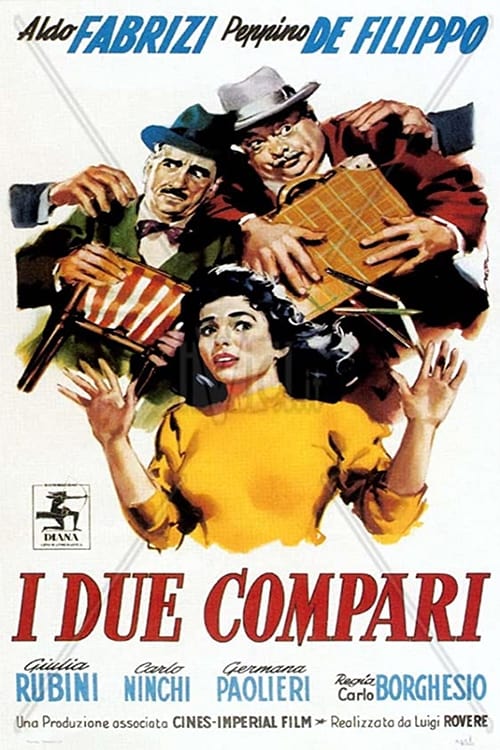
I due compari
1955
No user ratings available yet
Diversity score: 2.3 out of 10
No Poster Available
1936
ApprovedDirector
Robert Stevenson, Jack Hulbert
Runtime
76 minutes
Average Rating
No ratings yetSynopsis
In this he's on the dole, hungry and ready to do any job but quickly light-heartedly scams his way into society and a highly regarded position at a bank next to the beleaguered Robertson Hare. Here he invents a fraudulent business plan (Merrivale - you remember it surely?), the manager and chairman and another finance company are suck(er)ed in and it all snowballs from there. With of course a love interest as a dynamo.
Overall Score
Limited
Category Breakdown
LGBTQ+ Representation
The film lacks any evidence of LGBTQ+ characters or non-heteronormative identities. The plot centers on a traditional romantic structure involving a single love interest.
Gender Representation
Gender roles follow conventional 1930s patterns. While the female lead is described as a spirited dynamo, the plot is driven by male social maneuvering and comedic vulnerability.
Racial & Ethnic Diversity
The narrative appears to reflect a monolithic racial framework typical of 1930s Britain. There is no indication of a diverse or non-Anglo-Saxon cast.
Religious & Cultural Diversity
The story explores socioeconomic instability and class mobility through light-hearted farce. It uses financial scams as a comedic device rather than a systemic critique of institutions.
Disability Representation
There is no documented evidence regarding the inclusion of characters with physical or neurodivergent disabilities.
Strengths
Areas for Improvement
AI Analysis
Jack of All Trades is a product of its era, functioning as a traditional British musical comedy and light farce. The narrative prioritizes escapism and the reinforcement of existing social structures rather than subverting them. The film focuses on male-driven social climbing and conventional romantic tropes. While it touches on themes of unemployment and financial instability, these elements serve the comedy rather than offering a deep deconstruction of class or systemic issues. Ultimately, the production reflects the homogeneous social landscape of 1930s Britain, offering little in the way of diverse representation or modern social critique.
1955

1933
1949
1940

1953

1944

1937
1947
1943
1936
1935
1936
No reviews yet. Be the first to share your thoughts on this movie!
Use the rating form above to leave a star rating and optional review.