
Lazzarella
1957
No user ratings available yet
Diversity score: 2.6 out of 10
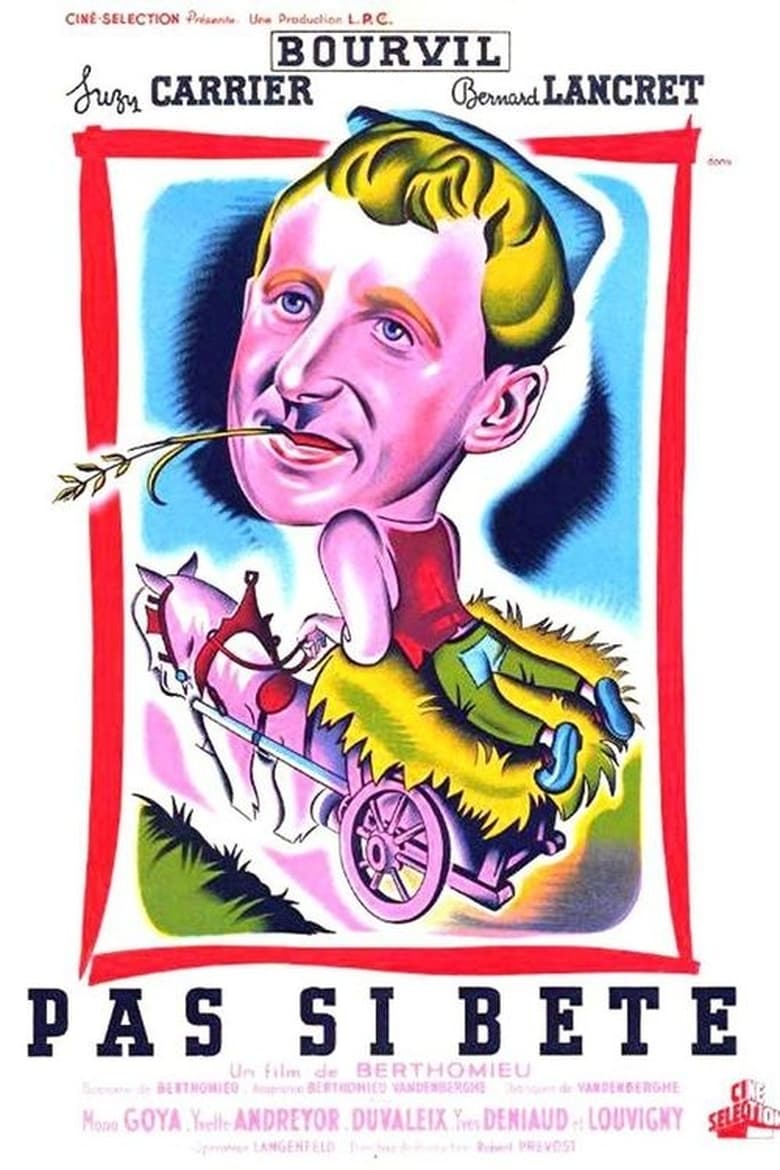
1947
Director
André Berthomieu
Runtime
100 minutes
Average Rating
No ratings yetSynopsis
Léon Ménard, a farmer and an apparently simple man of the country, is invited to visit his uncle Henri Ménard, a prosperous industrialist. He encounters a number of people scheming to marry into the Ménard family for the sake of money. Ménard discovers and thwart the plots and manages to unite a young couple who truly are in love. The romantic comedy ends happily with a double marriage. Henri's daughter Nicole marries Didier, and Ménard marries his new-found love Rosine. It turns out that Léon is "not so stupid" after all.
Overall Score
Limited
Category Breakdown
LGBTQ+ Representation
The film follows a strictly heteronormative trajectory. The plot concludes with a double marriage, reinforcing conventional romantic structures without any evidence of non-cisnormative identities.
Gender Representation
Gender dynamics reflect mid-century romantic comedy tropes. While the male protagonist subverts intellectual stereotypes, the narrative resolution relies on stabilizing the family unit through marriage.
Racial & Ethnic Diversity
The production reflects the demographic homogeneity of 1947 France. The story focuses on class distinctions between farmers and industrialists rather than racial or ethnic diversity.
Religious & Cultural Diversity
The narrative reinforces traditional Western social institutions and the sanctity of marriage. It promotes a conventional moral order where individual character corrects greed.
Disability Representation
There is no mention of characters with visible or invisible disabilities in the narrative.
Strengths
Areas for Improvement
AI Analysis
Pas si bête is a product of its historical era, functioning as a traditional comedy that prioritizes escapism over social subversion. The film focuses on the restoration of social order through marriage and the validation of individual character. The narrative relies heavily on established social hierarchies and conventional romantic ideals. It lacks the intentionality needed to disrupt tropes or provide intersectional representation, instead centering on class-based conflict and moral correction. Ultimately, the film serves as a window into mid-century French social mores, emphasizing the stability of the family unit and traditional marriage as the primary resolution for conflict.
1957
1941
1990
1943
1963
1955
1936
1958
1956
1962
1931
1936
No reviews yet. Be the first to share your thoughts on this movie!
Use the rating form above to leave a star rating and optional review.